
Narrower running channel with a matching narrower glider.
The wave heading explained technically
What are wave curtains?
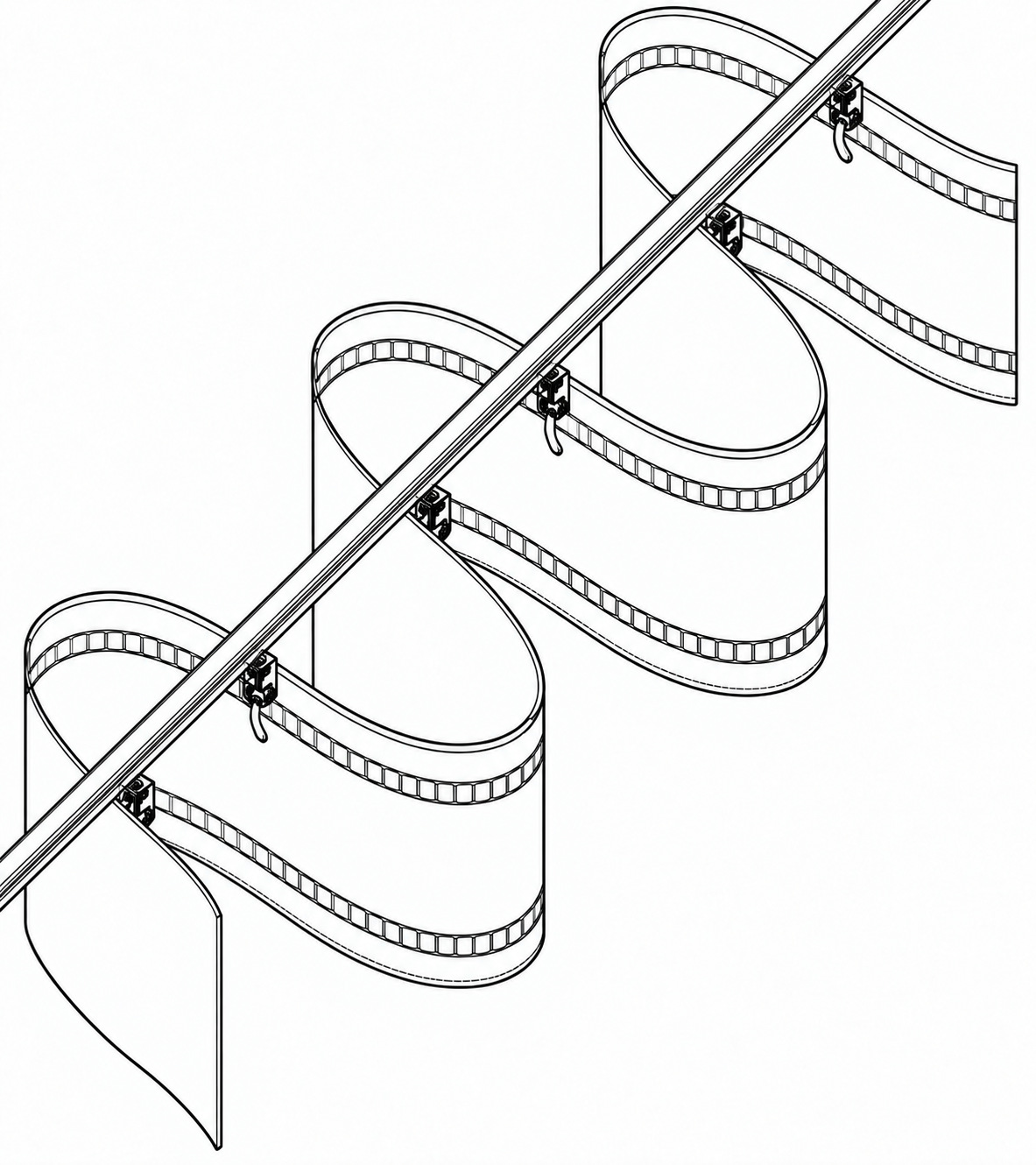
A wave curtain is a curtain with even S-shaped waves. The cord allows the gliders to be no more than 6 or 8 cm apart; the hooks sit at fixed intervals in the 8 cm high wave tape. The waves are created with 200% fabric; the end spreader below the track guides the first and last wave.
- 8 cmwave tape
- 6 or 8 cmglider spacing
- 12 or 16 cmhook spacing
- 200%fabric used
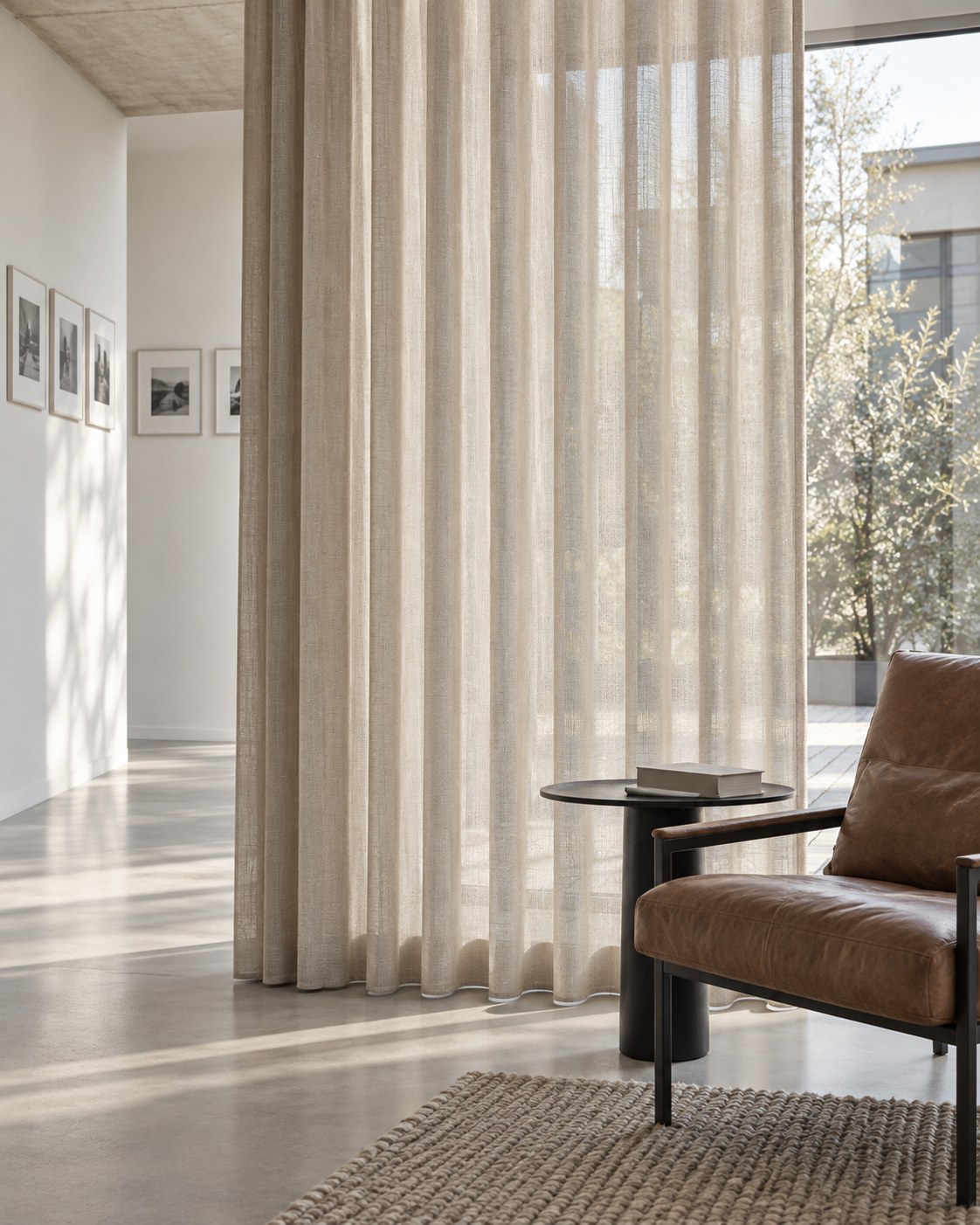
The complete system
How a wave heading is formed
Short answer: with a wave heading, the folds are not stitched into the top of the fabric. The shape is created by the cord between the gliders and the fixed position of the hooks in the wave tape. With 200% fabric, the fabric runs alternately in front of and behind the track, creating the S-shape.
So the track, gliders, cord, hooks, wave tape and end spreader work as one system. If one spacing is wrong, you will see it in the waves.
TrackWave glidersCordWave tapePin hooksEnd spreaderFabric
Wave gliders on a cord
6 or 8 cm is the distance between the gliders
The gliders are connected to each other by a cord. As a result, they can never move further apart than the chosen size when the curtain is closed. This ensures an even distribution along the track.
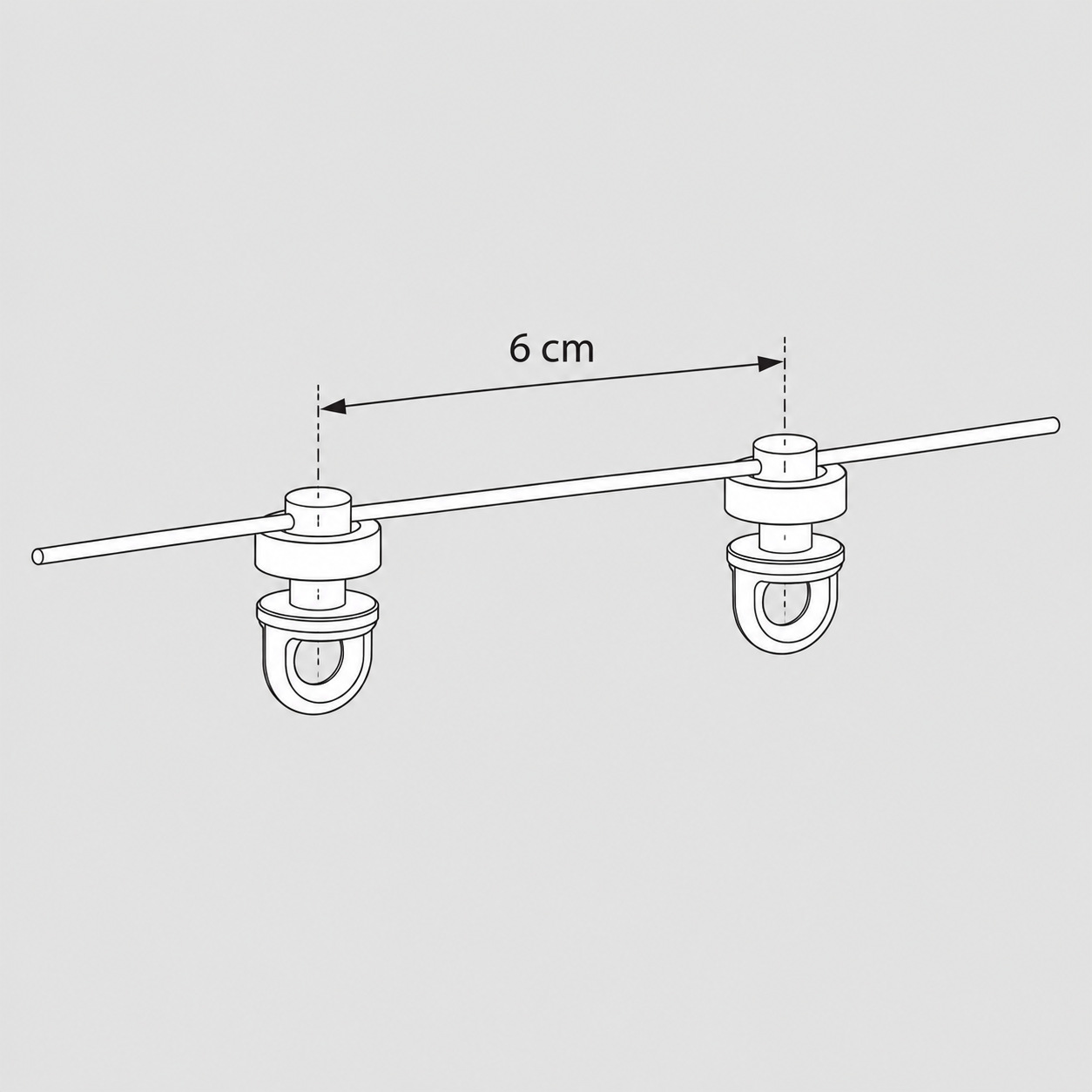
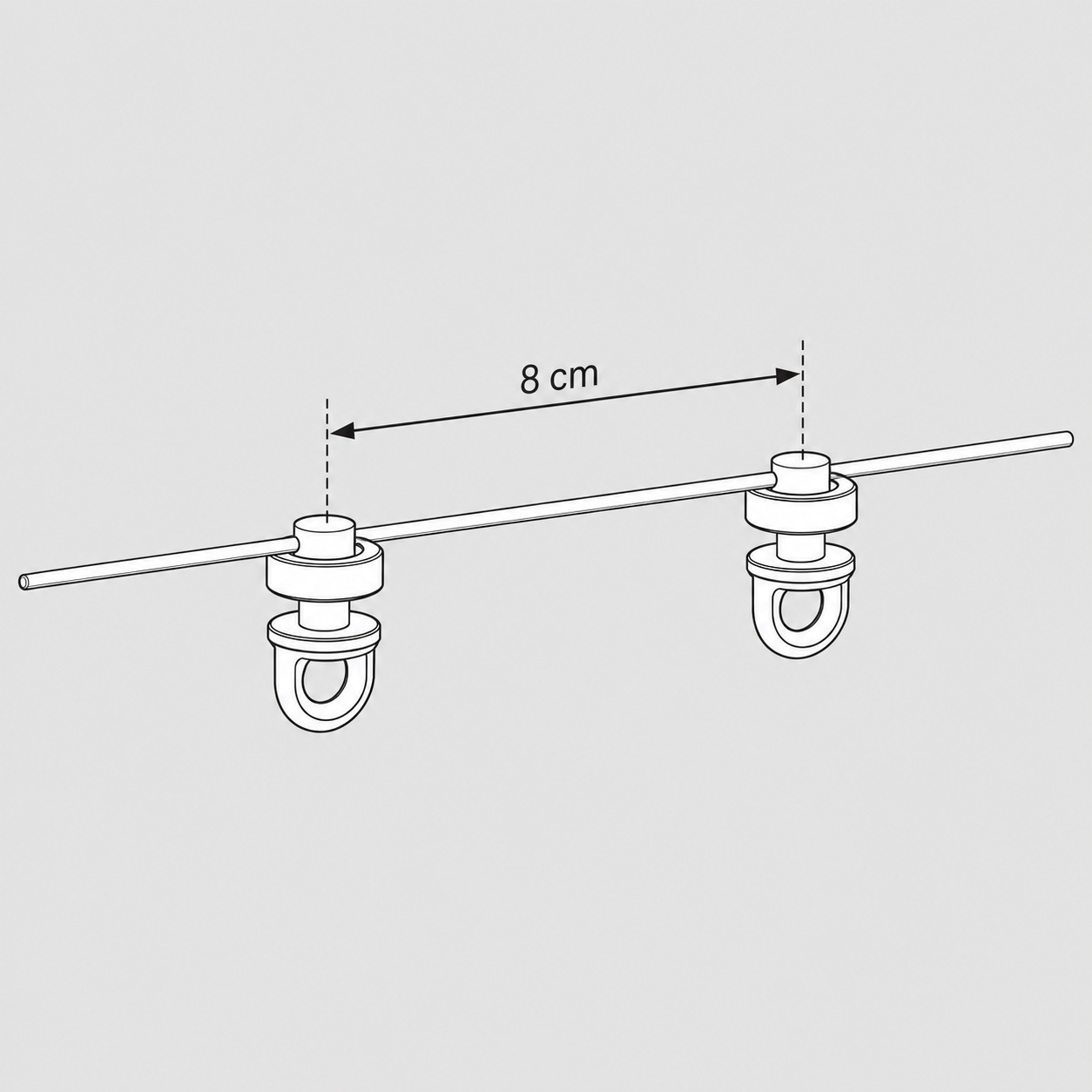
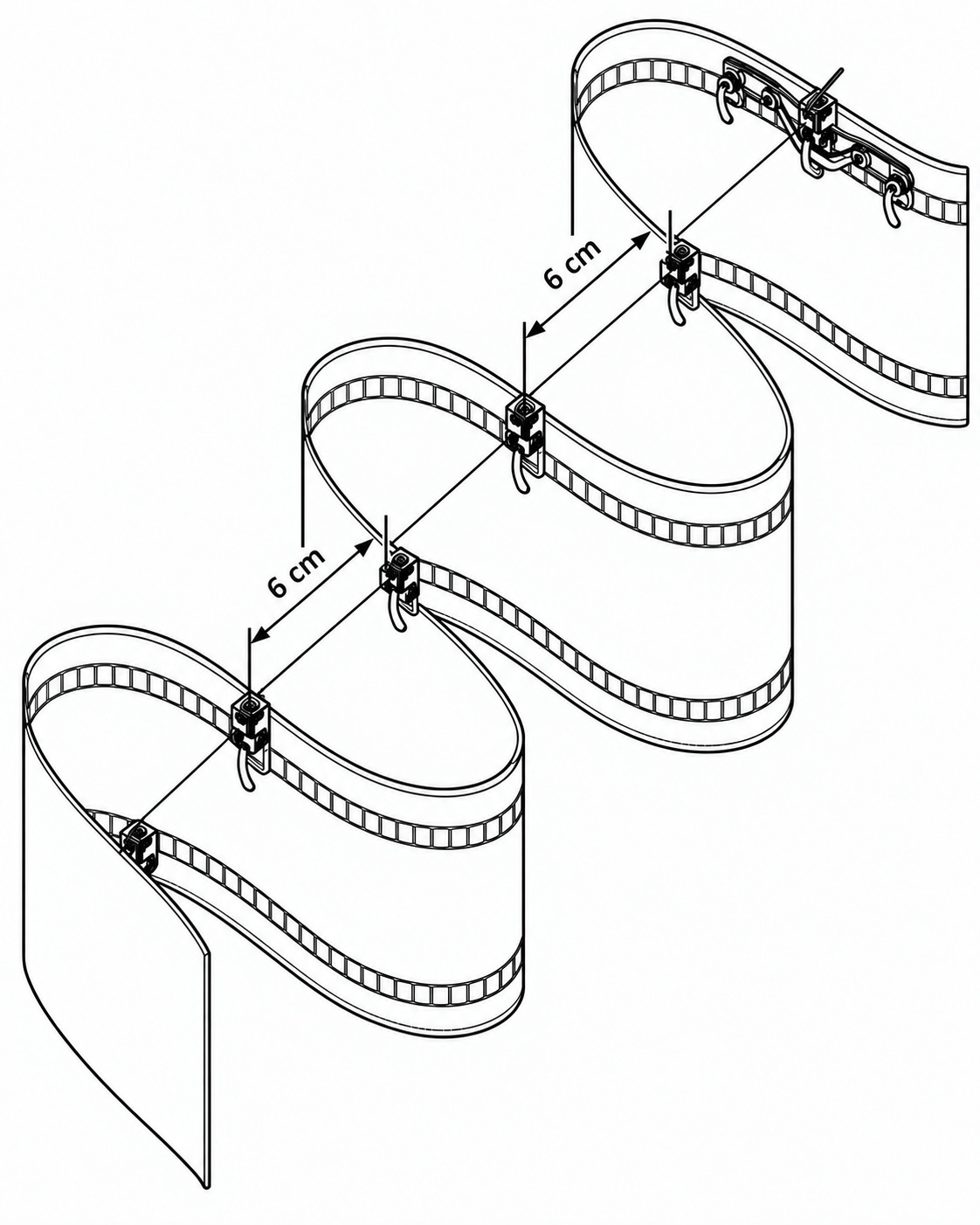
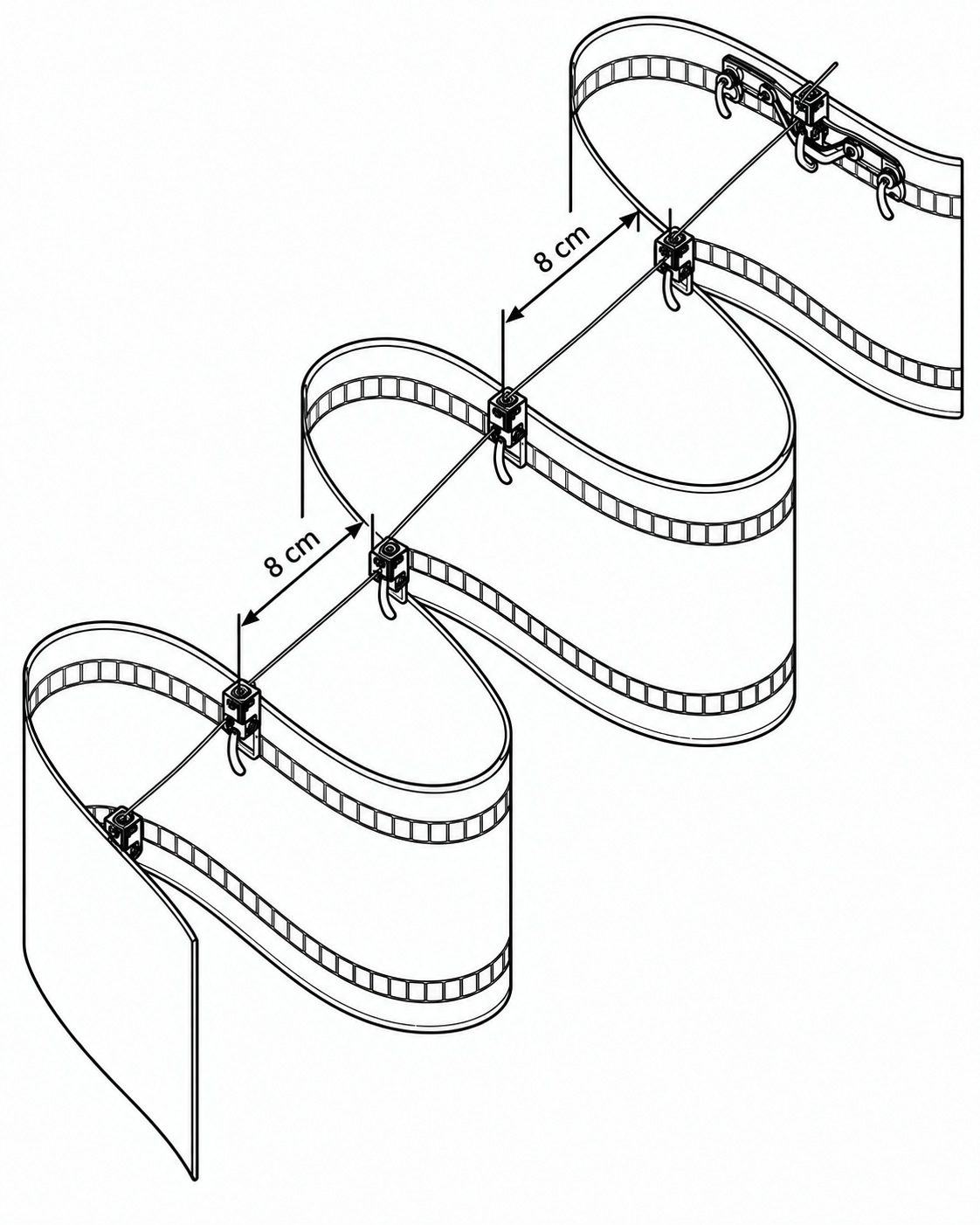
Important: 6 or 8 cm is not the distance between the hooks in the curtain. With 6 cm, the hooks are 12 cm apart. With 8 cm, it is 16 cm.
Wave tape
8 cm high tape with a pocket every 1 cm
We sew wave tape onto the back of the top edge. The tape is 8 cm high and has a small pocket every centimetre. That is where we insert the hooks.
The tape keeps the top edge neatly straight and gives us fixed positions for the hooks. The tape alone does not yet create the wave. That also requires the linked gliders and the right hook spacing.
8 cmwave tape height
1 cmdistance between the pockets
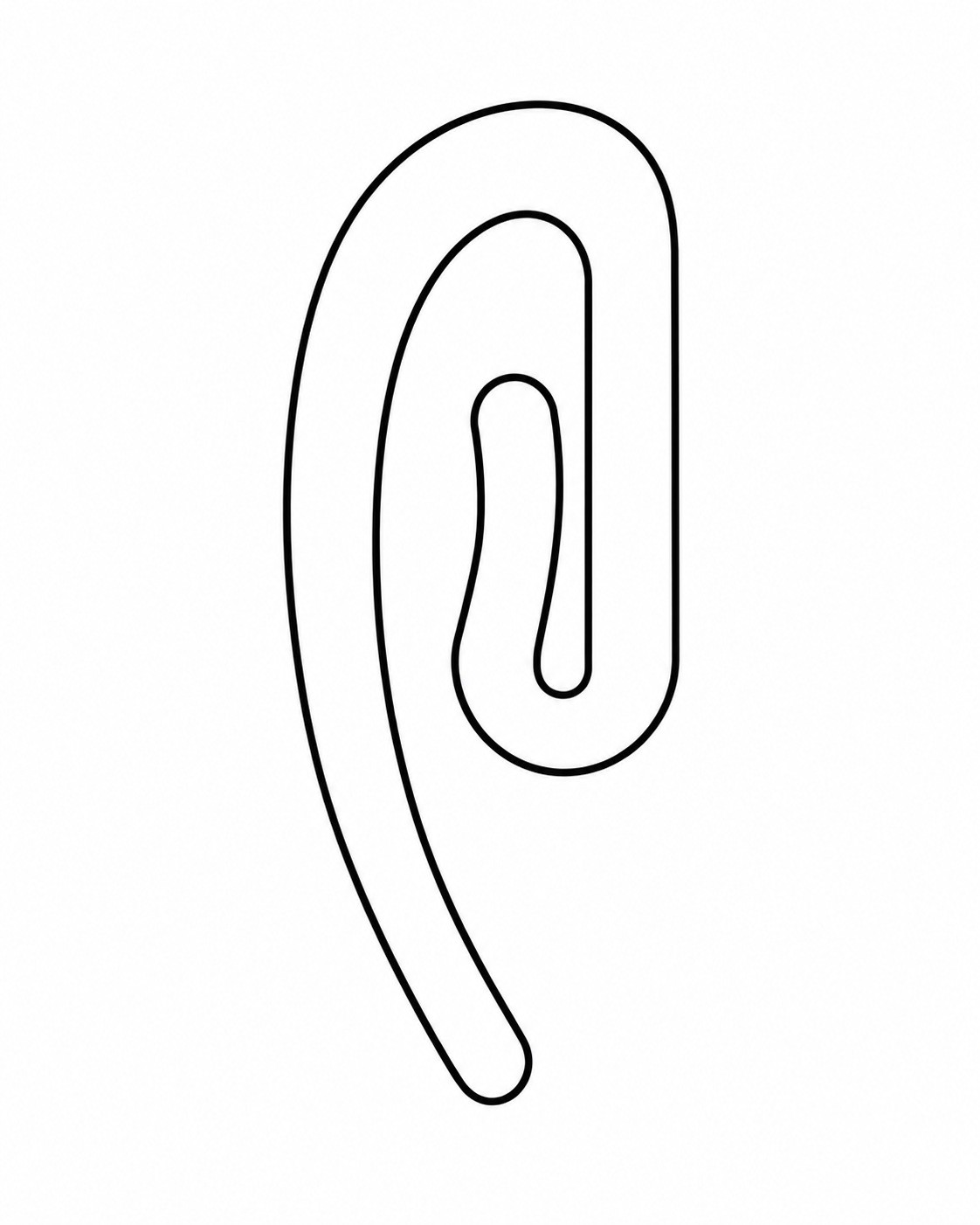
Counting pockets
With a 6 cm wave the hooks are 12 cm apart, with a 8 cm wave 16 cm
The pockets are one centimetre apart. This means we can simply count the hook spacing. The spacing must stay the same at every hook.
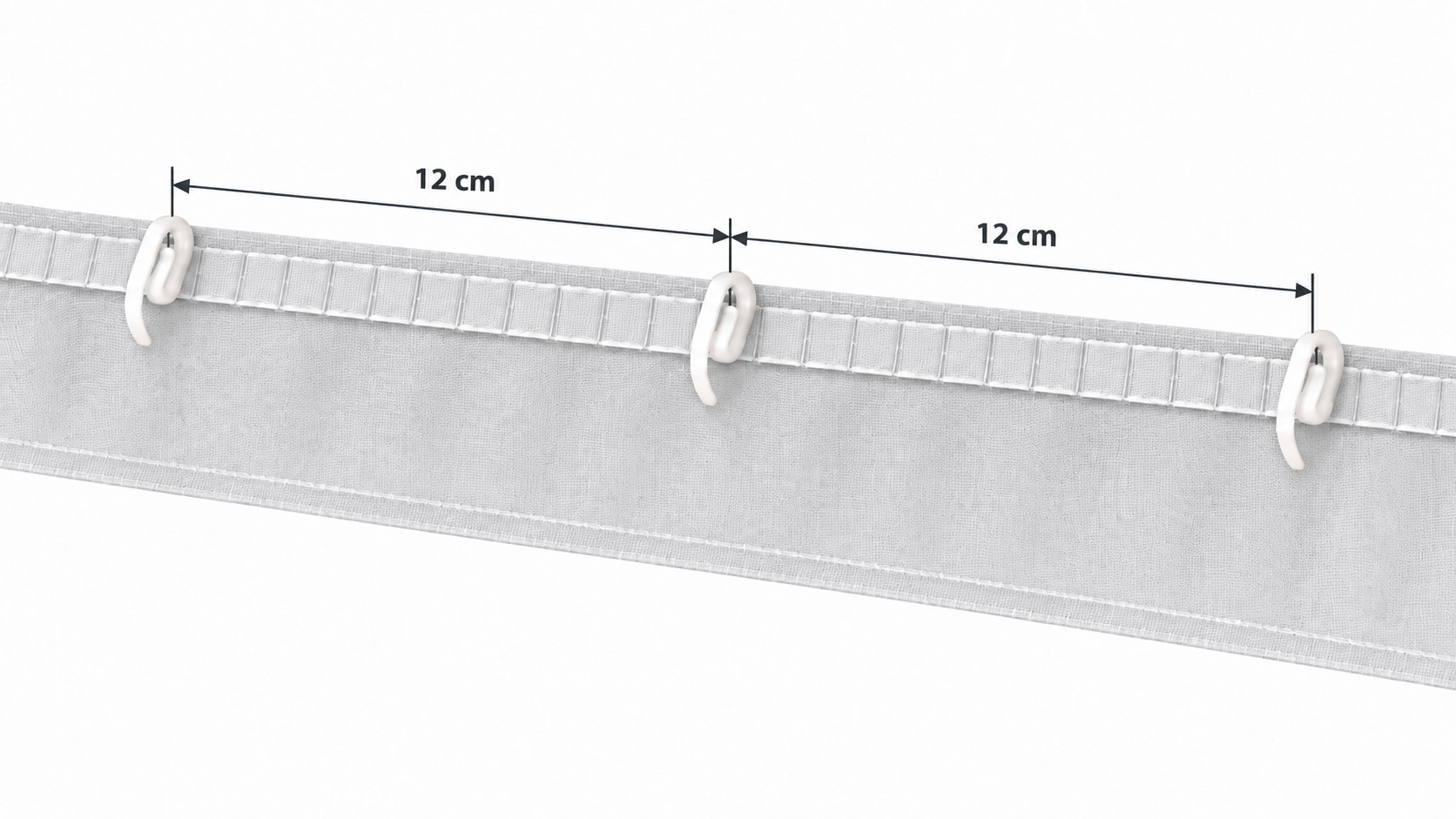
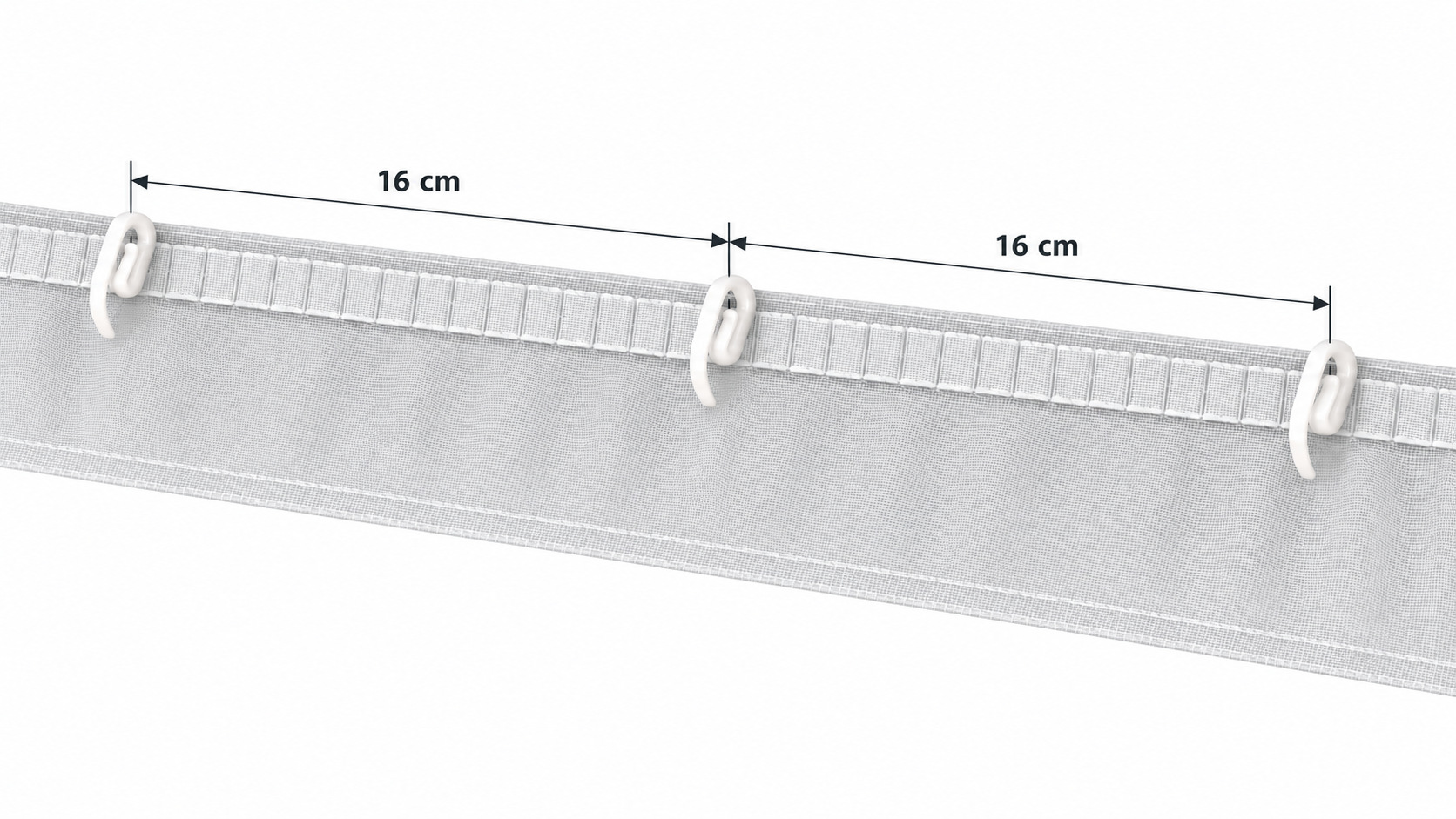
Miscounting a single pocket results in a different amount of fabric at that point. You will see that in the wave. That is why we always count the hook spacing again from the previous hook.
Why 200% fabric?
Twice as much fabric as the track width gives our fixed wave
With a 6 cm wave there is 12 cm of fabric between two hooks, while the gliders are 6 cm apart. With a 8 cm wave, it is 16 cm of fabric over 8 cm of track. In both cases the ratio is 2 to 1.
12 cm fabric÷6 cm track=200%
16 cm fabric÷8 cm track=200%
That is why at Gordijnen.com we use 200% fabric for the wave as standard. This keeps the waves even across the whole width.
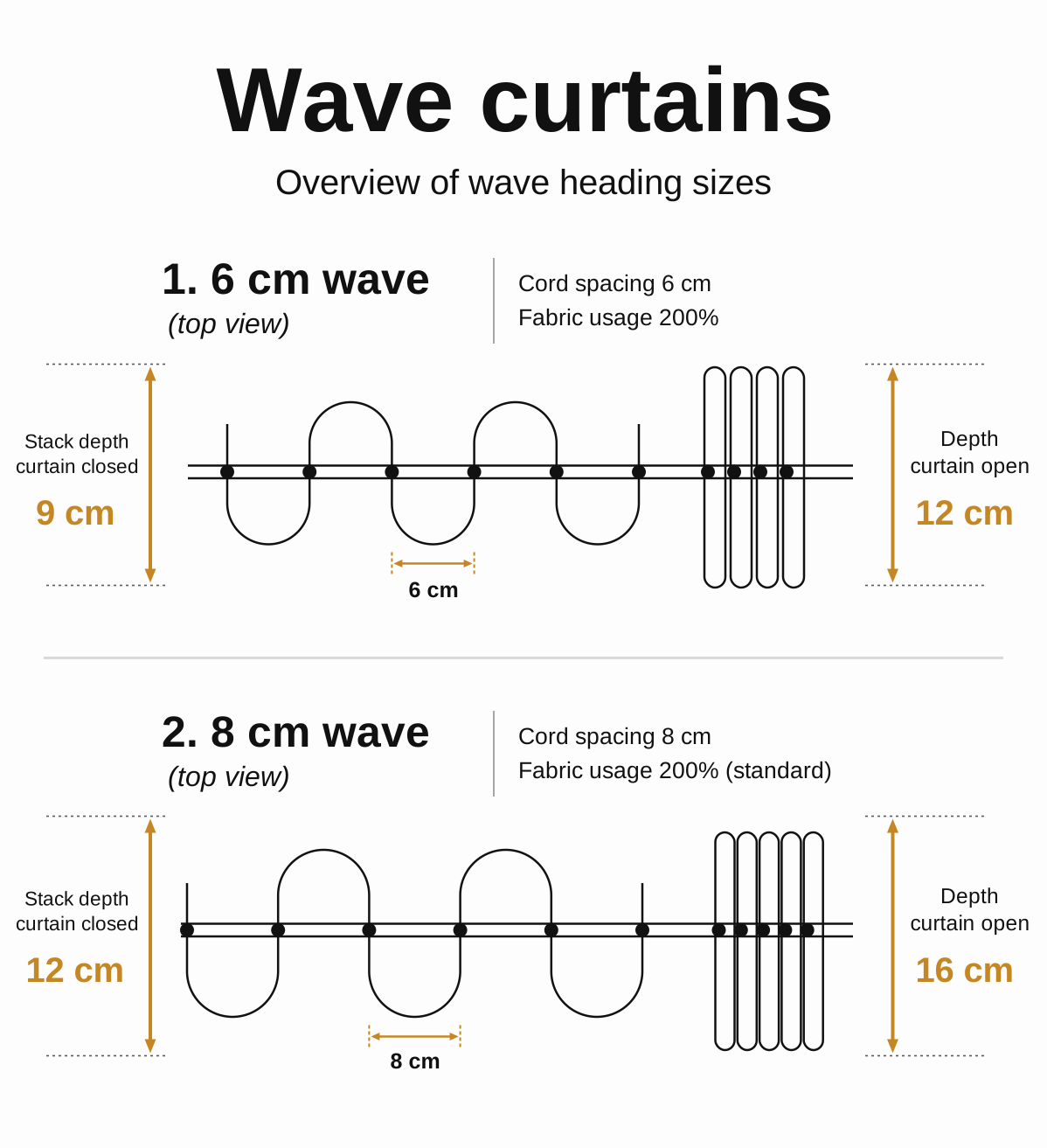
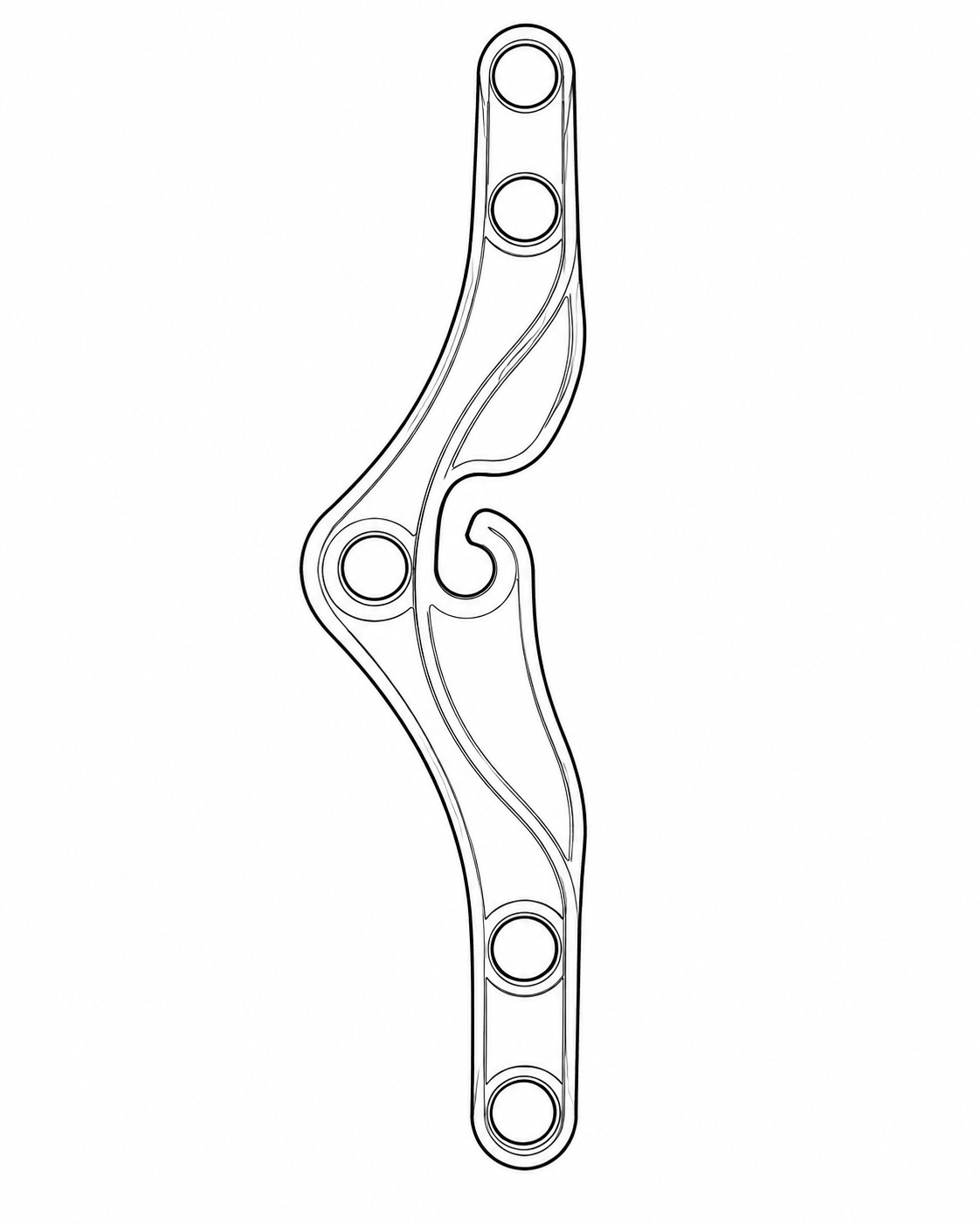
Reading the drawing: under “curtain closed” you see the depth of the waves around the track. Under “curtain open” you see the depth of the drawn-back curtain stack.
Start and end of the wave
The end spreader makes the first and last wave run the right way
With an ordinary glider we use one hook. With the end spreader we use two hooks: one on each side. This guides the fabric around the end spreader, so the first wave starts neatly straight away.
The same happens on the other side of the curtain. As a result, the last wave closes towards the window or wall instead of turning forwards at random.
1 glidernormally 1 hook
1 end spreader2 pin hooks
Seen from above
This is what the fixed S-shape looks like with 6 and 8 cm
With the cord pulled taut, the distance between the gliders is 6 or 8 cm. When the curtain is opened, they slide closer together. The fabric keeps falling alternately in front of and behind the track.
Track and gliders
Narrow and wide channel refer to the track, not to 6 or 8 cm
Not every wave glider fits every track. The track’s running channel determines which glider model is needed. Some tracks use a narrow channel, others a wider channel or their own glider model.
Within the suitable system, you then choose the cord spacing of 6 or 8 cm. So these two choices are independent of each other.
Wave can be used in different tracks: an ordinary ceiling track, a track on wall brackets, a pole-style track, a recessed or plaster-in track and — if the system is suitable — a curved or electric track.
Different running channel and therefore a different type of glider.
White or black
Wave gliders are available in white and black. With a white track we use white gliders where possible; with a black track, black ones. Because the curtain hangs below the track, this part of the system remains visible.
WhiteBlack
We always choose the glider based on the track profile. That way the curtain runs smoothly and the wave spacing stays correct.
All about wave curtain tracksSpace around the track
A wave runs in front of and behind the track
The glider runs in the track, but the hook and the fabric hang below it. The fabric then curves forwards and backwards in turn. That is why a wave needs free space at a window, wall, window handle or pelmet box.
The exact space depends on 6 or 8 cm, the fabric and the situation. We cover those measurements on the separate measuring and 6/8 cm pages.
Which fabrics can be used for wave?
From voile to blackout
Wave works with light and dense curtain fabrics. The thickness, suppleness and weight of the fabric do determine how full the waves look and how much space the stack needs.
Wave or classic pleat?
The difference is mainly at the top of the curtain
Wave
The shape is created by linked gliders, wave tape and fixed hook spacings.
Single or double pleat
The pleat is stitched into the top of the fabric itself. The gliders do not need to be connected by a wave cord.
Both systems can look beautiful. Wave is above all recognisable by the even S-shape that continues down from the track.
The technology in real life
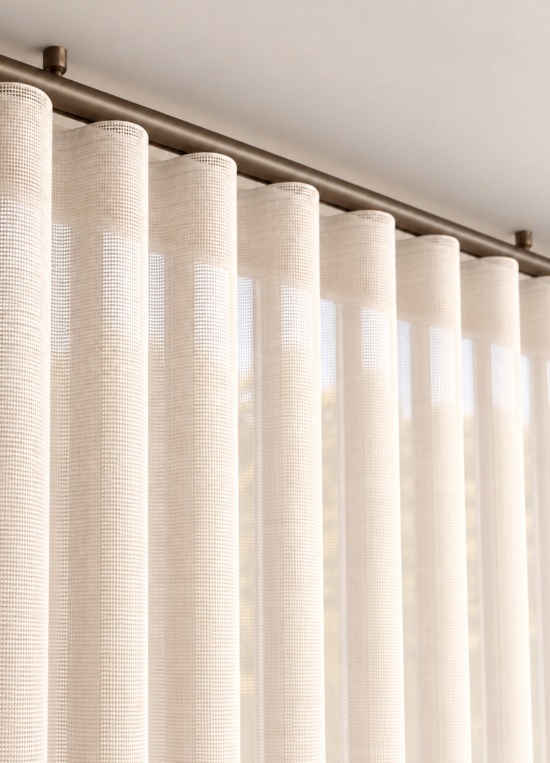
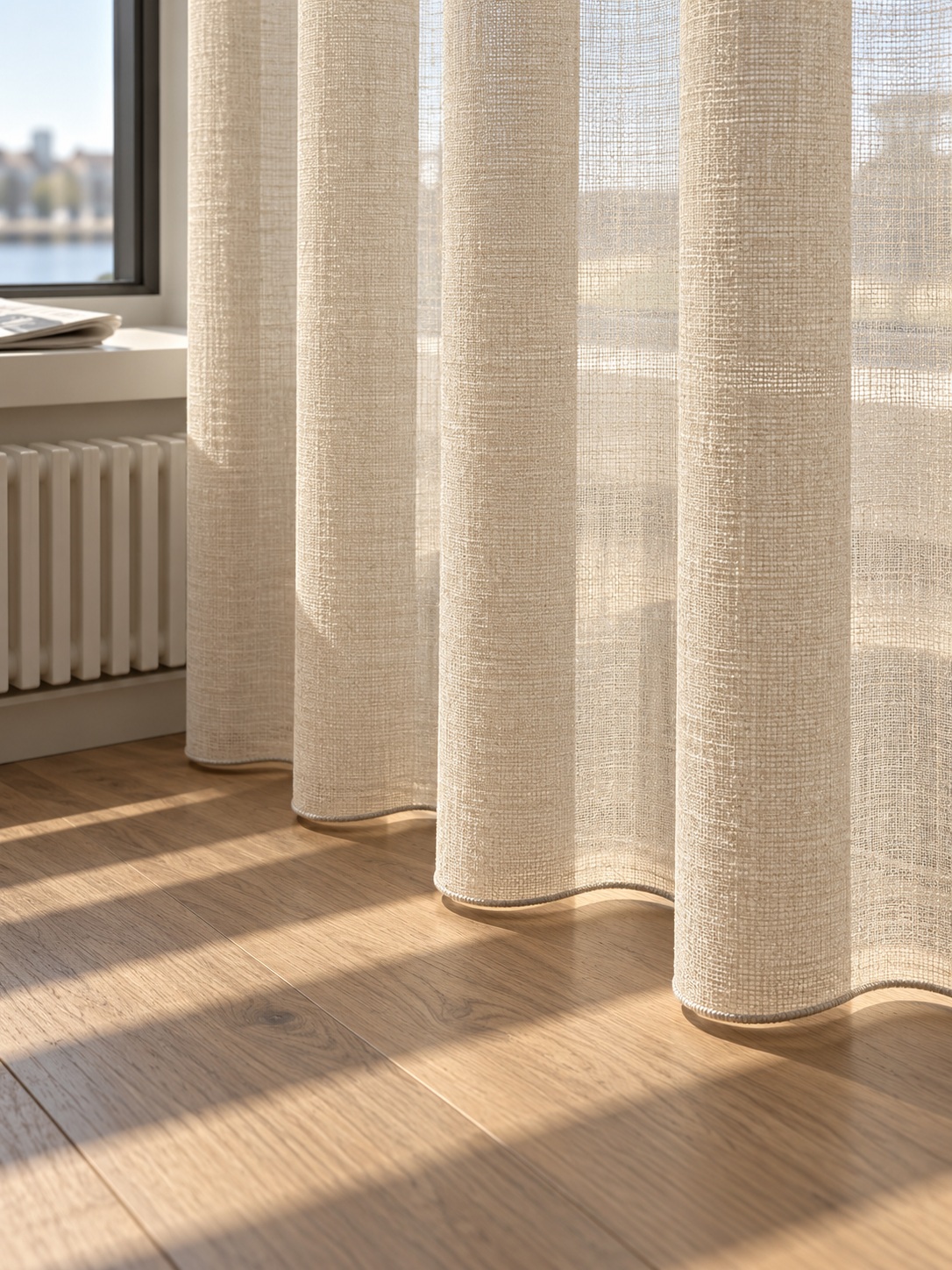
The same wave, a different fabric and finish
The basis remains the same: linked gliders, wave tape and fixed hook spacings. The fabric and the finish then determine how light, full or crisp the curtain looks.
If the wave does not fall nicely
You will see these mistakes in the waves straight away
A wave does not have to be complicated, but the fixed measurements do have to be right.
A hook in the wrong pocket gives a different wave.
The fabric touches the window, wall or handle and cannot move freely.
The glider must match the track profile.
Then the first or last wave may face the wrong way.
The top edge then does not run neatly below the track.
Our version uses 200% fabric for the chosen wave.
Further into the technology
Each next step has its own explanation page
Here you have seen how the system works. For choosing, measuring, tracks and hanging, we continue topic by topic.
Frequently asked questions
Technical questions about wave curtains
The answers below are about the wave system itself. For exact measurements, tracks and installation, you can then go on to the separate technical page.
What is a wave curtain?
A wave curtain is a curtain in which linked gliders, wave tape and hooks together create even S-shaped waves. So the folds are not stitched into the top of the fabric as with a single or double pleat.
What is a wave heading?
Wave heading is the name for the fixed waves that run in front of and behind the track. The shape is created by the cord that limits the glider spacing and the fixed amount of fabric between the hooks.
What are wave gliders?
Wave gliders run in the track and are connected to each other by a cord. That cord limits the spacing between them to 6 or 8 cm; when the curtain is opened, the gliders move closer together. Some suppliers call these gliders runners.
What does 6 or 8 cm wave mean?
It is the centre-to-centre distance between two wave gliders. With 6 cm the hooks are 12 cm apart; with 8 cm the hooks are 16 cm apart.
How high is the wave tape?
At Gordijnen.com we use wave tape that is 8 cm high. The tape has a pocket every centimetre for the pin hook.
How many pockets do you count with a 6 cm wave?
With our 6 cm wave, the hooks are 12 cm apart. Because the pockets are one centimetre apart, you count 12 pockets from hook to hook.
How many pockets do you count with a 8 cm wave?
With a 8 cm wave, the hooks are 16 cm apart. So you count 16 pockets from hook to hook.
Why does wave use 200% fabric?
With a 6 cm wave, we use 12 cm of fabric over 6 cm of track spacing. With 8 cm, we use 16 cm of fabric over 8 cm of track spacing. Both ratios are 2 to 1, or 200%.
What does the end spreader do?
The end spreader sits below the track at the start and end of the curtain. With two hooks, it ensures that the first and last wave run the right way straight away.
Why are there two hooks at the end spreader?
The fabric runs along the end spreader on two sides. With a hook on each side, the first or last wave is directed and the side edge stays neat.
What is the difference between narrow gauge and wide gauge?
This concerns the running channel of the track and the glider model that fits it. It says nothing about the choice between 6 and 8 cm wave.
Does wave fit every curtain track?
No. The wave glider must match the track profile. Some existing tracks can be made suitable, others cannot. We check this for each track system.
Are wave gliders available in white and black?
Yes. There are white and black wave gliders. Which version is suitable also depends on the track system.
Why does a wave curtain hang below the track?
The glider runs in the track profile. The eye of the glider, the hook and the curtain hang below it. As a result, the track remains visible above the fabric.
How much space does wave need?
The fabric runs in front of and behind the track. That is why there must be free space at the window, the wall, window handles and any pelmet box. The exact measurement depends on 6 or 8 cm and the chosen fabric.
Can wave be used on an electric track?
Yes, provided the electric track system is suitable for wave gliders with the chosen spacing. The basic principle of tape, hooks and waves remains the same.
Can wave be used on a curved track?
It can with track systems that are suitable for bending and for which matching wave gliders are available. The gliders must be able to keep running freely in the bend.
Which fabrics are suitable for wave?
From voile and inbetween to dense opaque curtains, dim out and blackout. The fabric must fall softly enough for the chosen wave, and the track and hook system must be matched to the fabric.
Made to measure wave
Now you know how the system works
Then choose your fabric and 6 or 8 cm wave, or first look at the technical page about measuring and tracks.