
Above all, plenty of privacy.
Opaque curtain · dim out · blackout
Room darkening wave curtains: dim out or blackout?
Want less light in the bedroom, bothered by sun on your TV, or want to be able to sleep during the day? Here you can easily see which type of curtain suits your needs.
- Opaque curtain for privacy
- Dim out approx. 75–85%
- Blackout lightproof fabric
Approximately 75–85% less light.
No light through the fabric.
Both wave spacings available.
Compare at home by your own window.
First, this difference
Room darkening is not always the same
Anyone searching for room darkening curtains can mean different things. Sometimes you mainly want privacy. Sometimes you want to make a bedroom noticeably darker. And sometimes you want as little light as possible.
That is why we distinguish between a dense opaque curtain, dim out and blackout. All three look dense, but they do not block the same amount of light.
Opaque curtainDense and plenty of privacy.
Dim outApproximately 75–85% light reduction.
BlackoutNo light through the fabric.
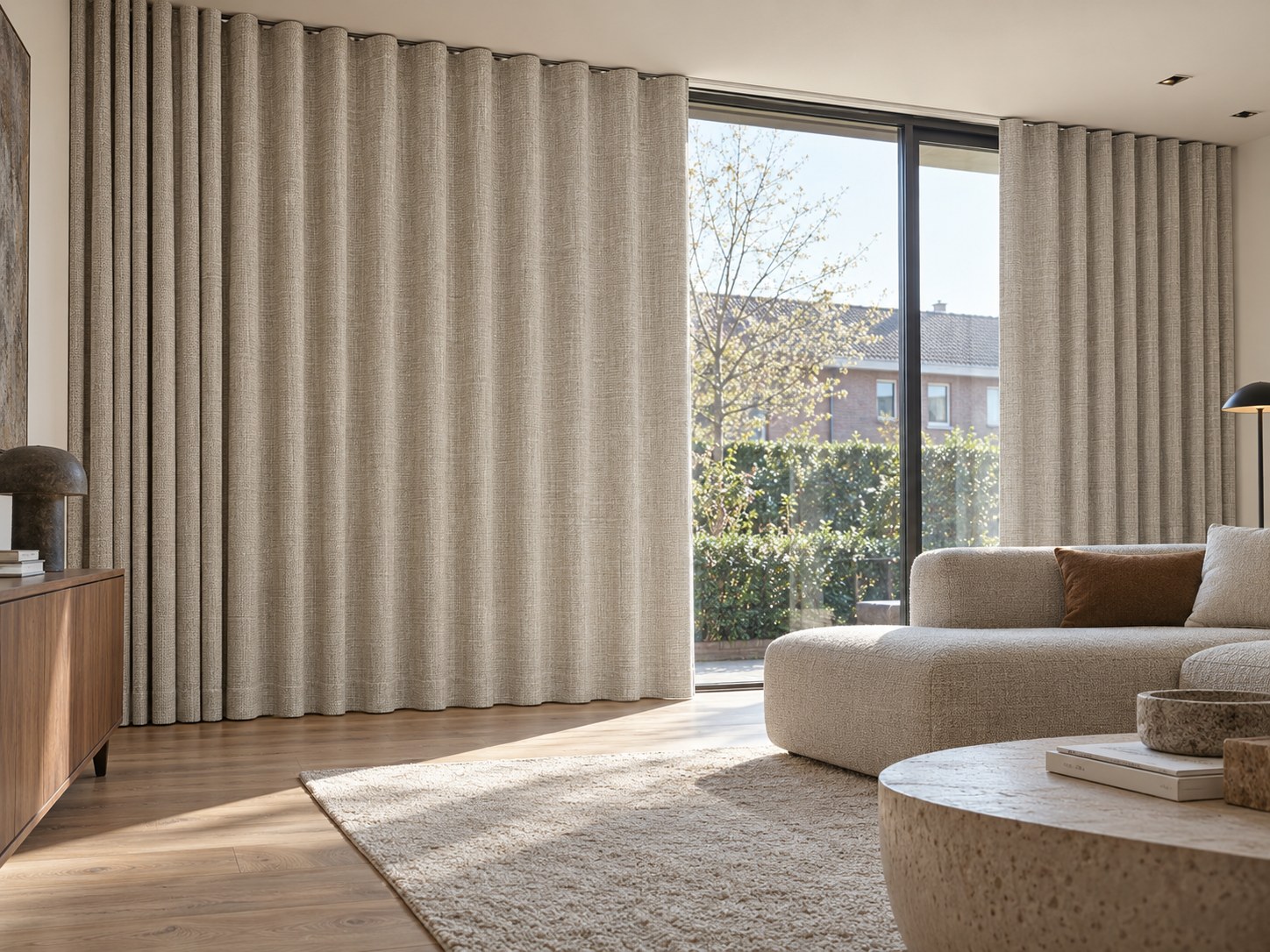
A dense fabric does not always darken a room equally.
Side by side
Opaque curtain, dim out or blackout?
These are the key differences. For all the details, you can then go to the product page of the fabric that suits you.
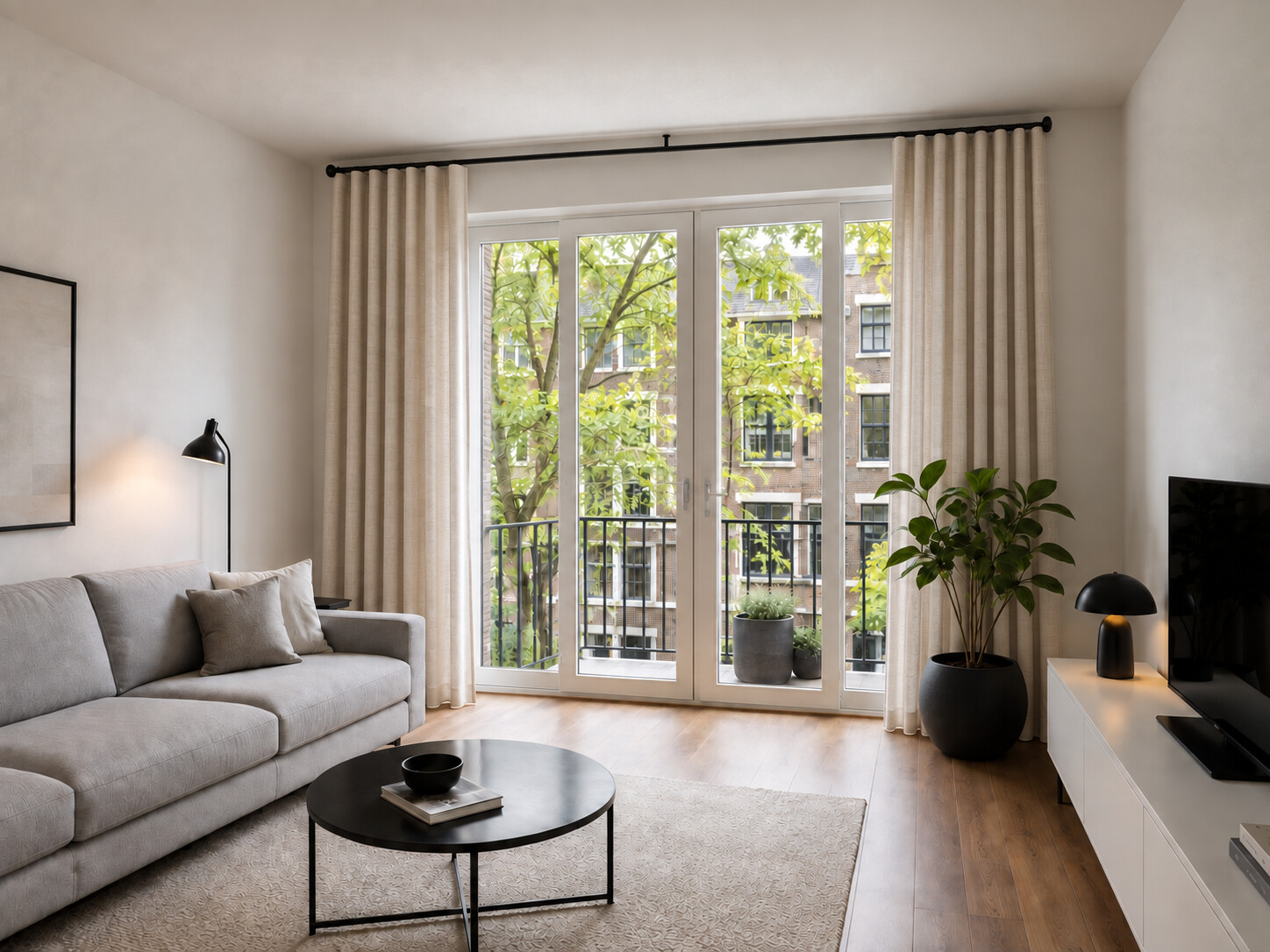
Above all, privacy
Opaque curtain
A dense opaque curtain stops people seeing in, but is not intended to darken the room strongly.
- Privacy
- High
- Blocking light
- Limited
- Normal bedroom
- Sometimes
- Sleeping during the day
- Not the best choice
- Living room / TV
- Mainly atmosphere and privacy
- Projector
- Less suitable
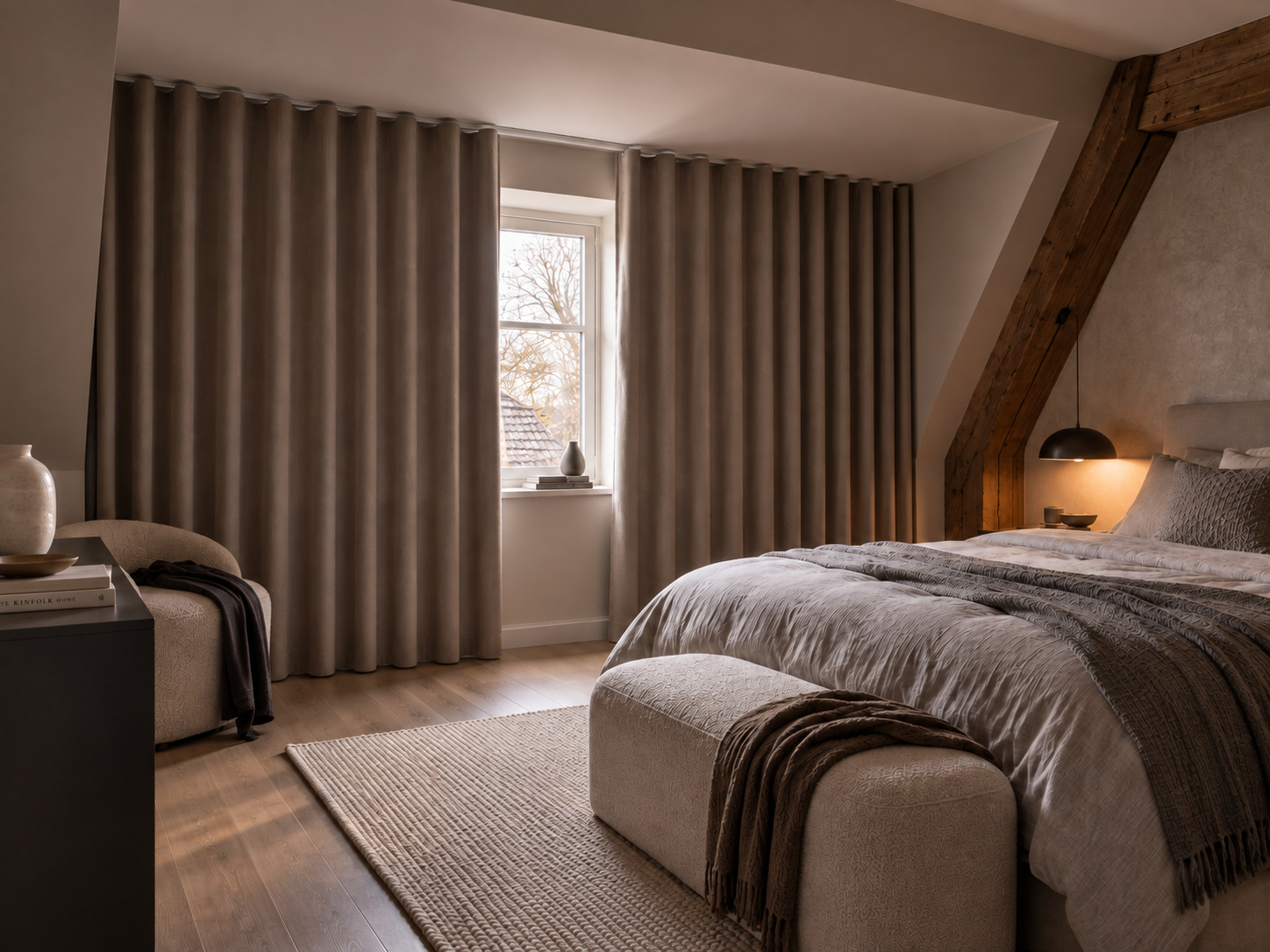
75–85% light reduction
Dim out
Dim out blocks a lot of light, but still lets some through. Dark colours darken more than light colours.
- Privacy
- High
- Blocking light
- Approximately 75–85%
- Normal bedroom
- Very suitable
- Sleeping during the day
- Possible, but lets some light through
- Living room / TV
- Very suitable
- Projector
- Sometimes enough
No light through the fabric
Blackout
Blackout is lightproof. No light comes through the fabric itself, even in a light colour.
- Privacy
- High
- Blocking light
- No light through the fabric
- Normal bedroom
- Suitable
- Sleeping during the day
- Best choice
- Living room / TV
- Also possible
- Projector
- Usually the best choice
Quick choice
What should you choose in your situation?
You do not need to know all the technical differences first. Simply start with what you want to solve.
Opaque curtain for privacy
If stopping people seeing in matters most.
View opaque curtainDim out for a normal bedroom
If you want it darker, but not pitch dark.
View dim outDim out for a TV or monitor
Useful against bright light and glare.
View dim outBlackout for night shifts
If you want to sleep in as dark a room as possible during the day.
View blackoutBlackout for a projector
If as little residual light as possible is important.
View blackoutBlackout in a light colour
Even light blackout fabrics let no light through the fabric.
View blackoutColour and darkening
A light colour works differently with dim out than with blackout
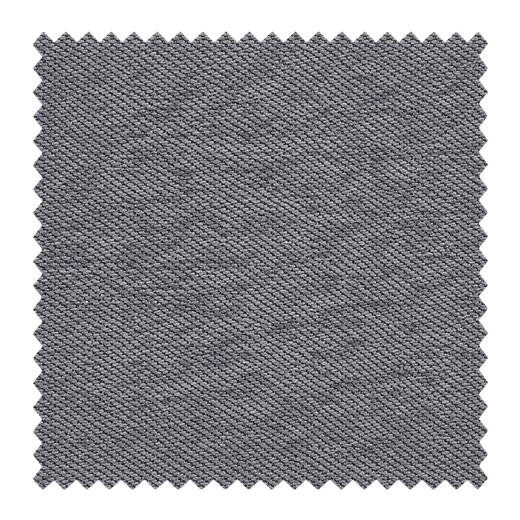
With dim out, the colour makes a difference. In dark colours, more black thread is woven in. As a result, dark colours block more light than light colours.
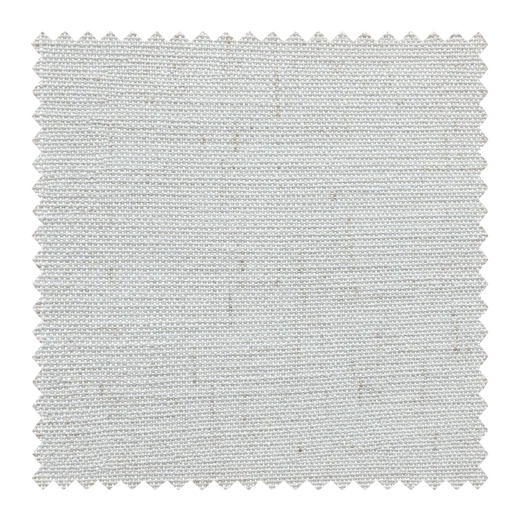
With blackout it is different. The fabric is lightproof in all colours. Even off-white, ecru and natural let no light through the fabric.
Dim outdark colour = more light blocked
Blackoutall colours are lightproof
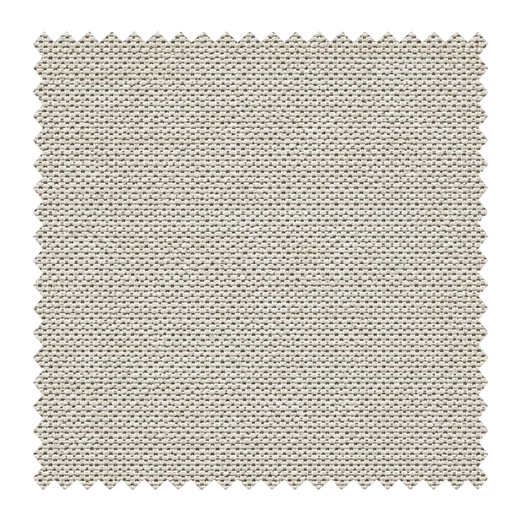
Bedroom
Which room darkening suits the way you sleep?
Not everyone wants a bedroom equally dark. Above all, consider how sensitive you are to light and when you sleep.
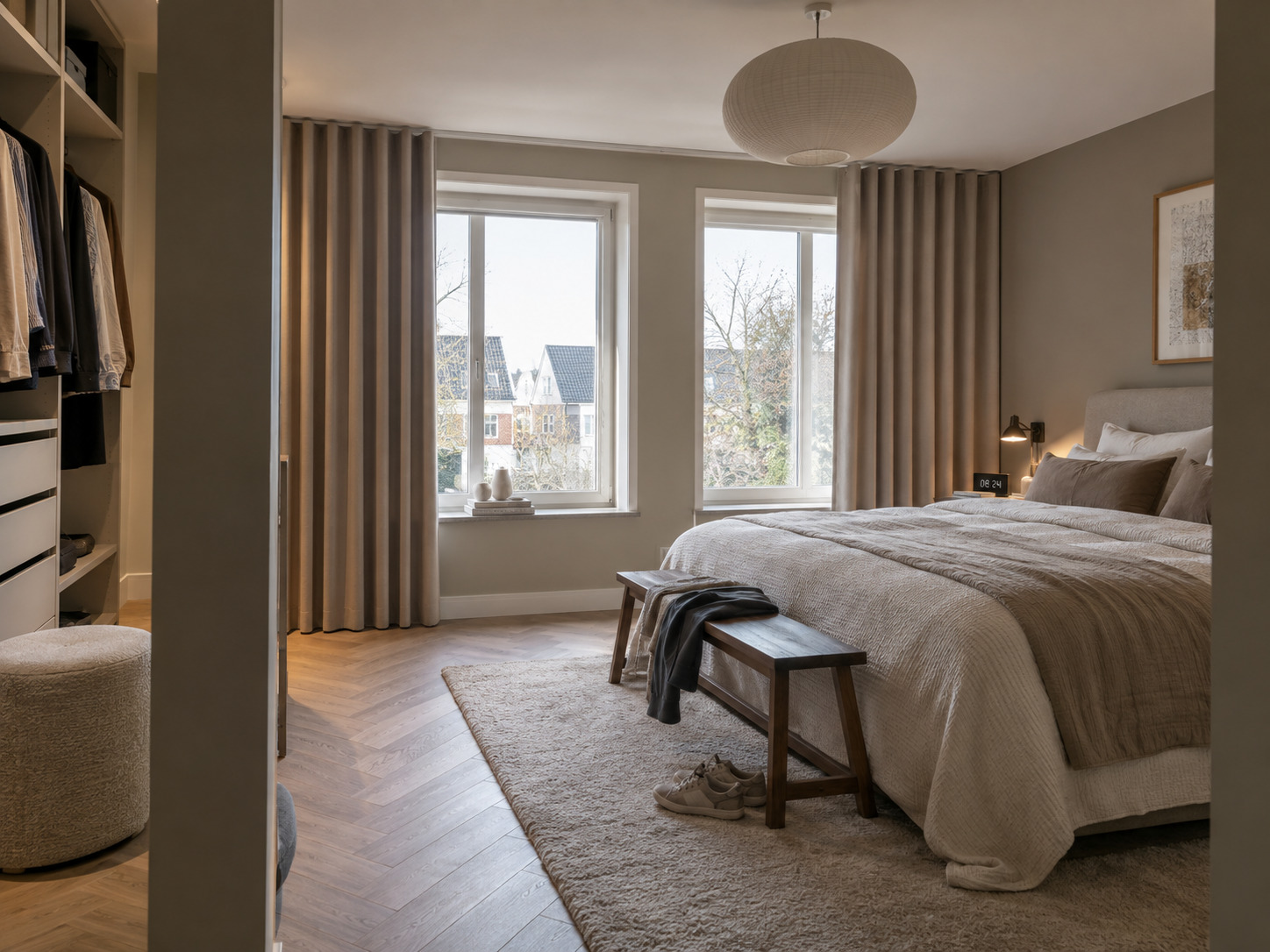
Normal sleeper
Dim out is often enough
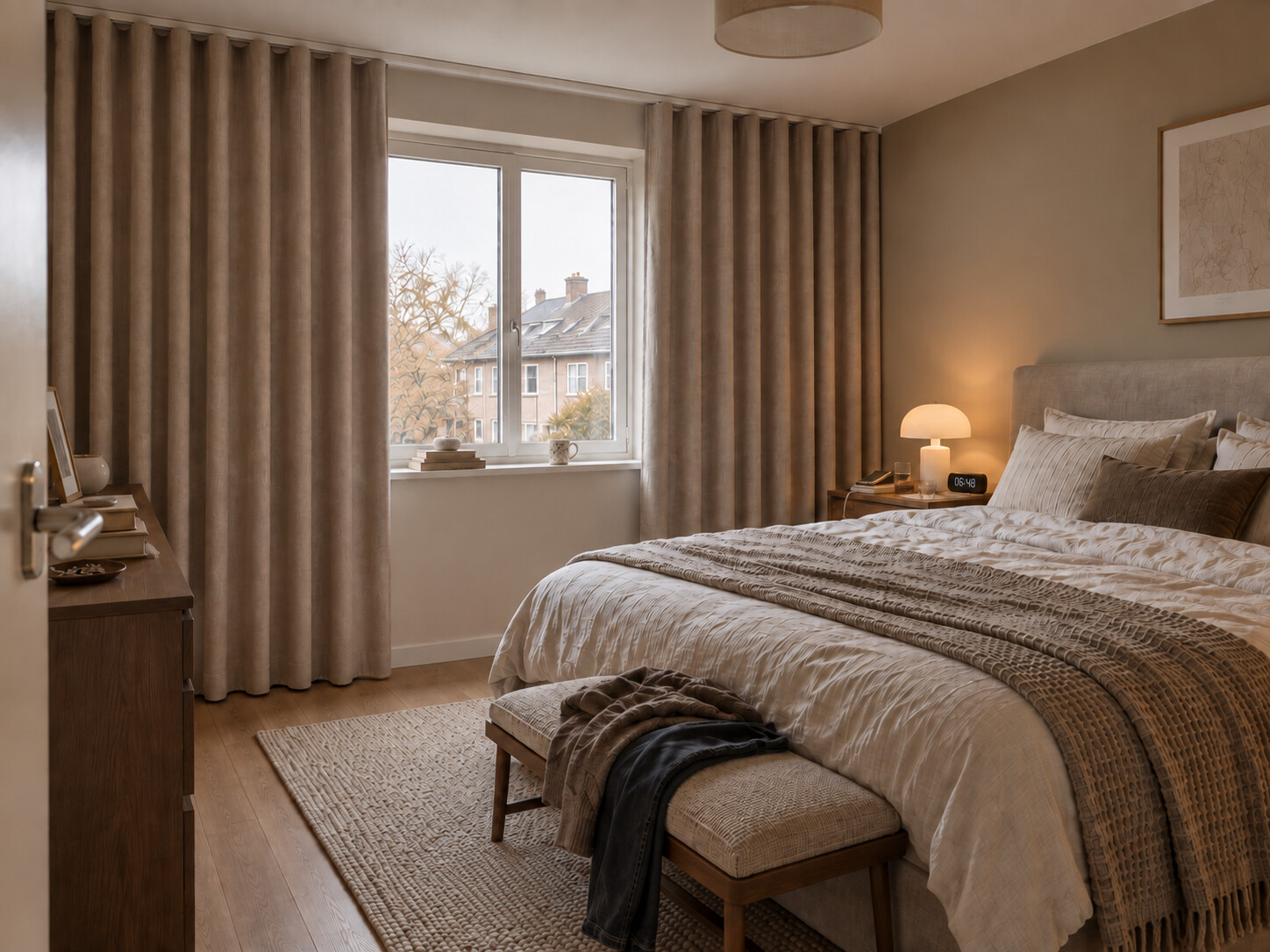
You make the room noticeably darker, but some light remains. Many people actually find that pleasant.
View dim out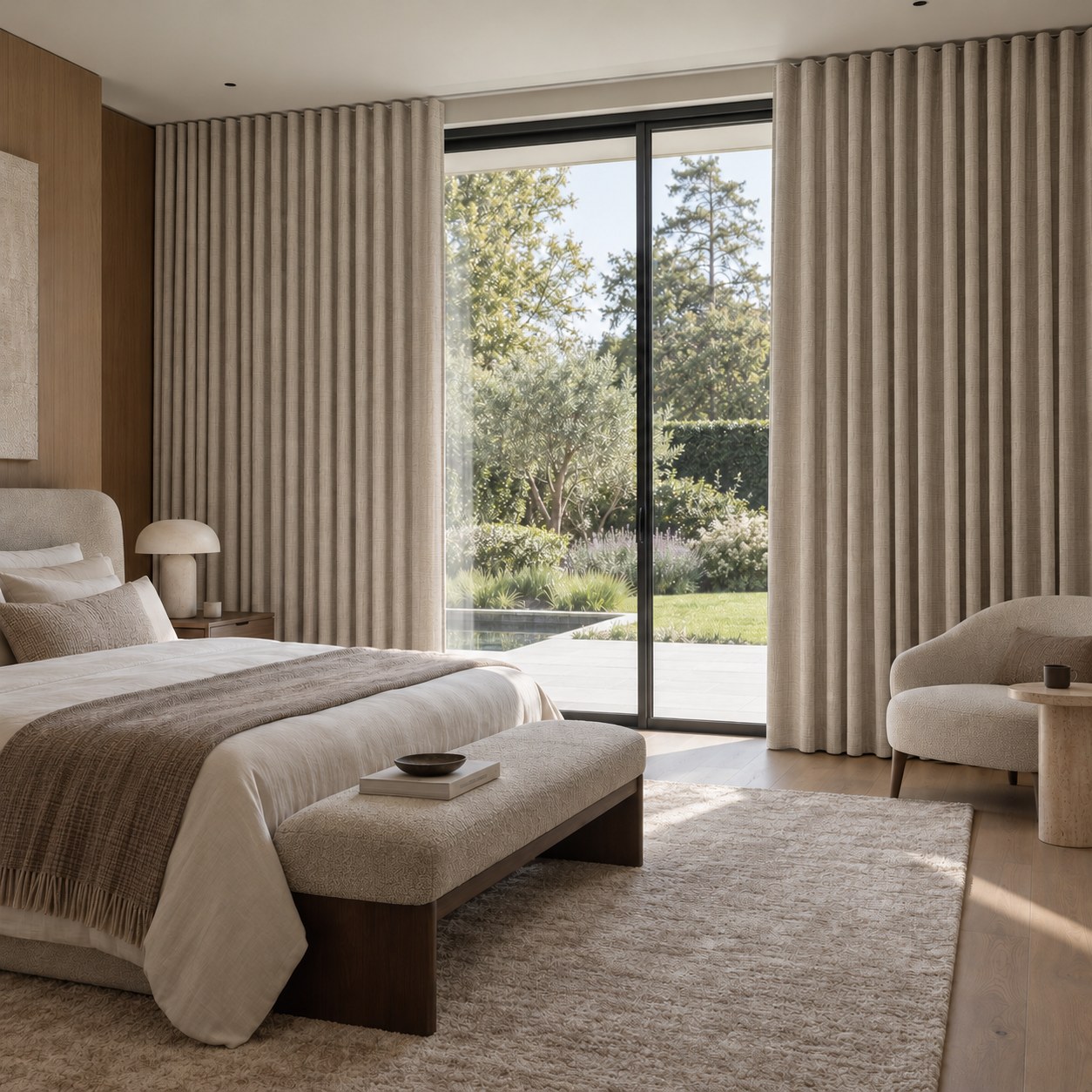
Sleeping during the day or very sensitive to light
Blackout is a better fit
No light comes through the fabric itself. For the darkest result, the positioning around the window also needs to be right.
View blackoutBlackout fabric is not the same as a pitch-dark room
Where can light still get past the curtain?
Blackout says something about the fabric. No light comes through the fabric itself. Even so, light can still enter the room through the space around the curtain.
TopA wave curtain hangs below the track.
SideA strip of light may still be visible next to the curtain.
Between two panelsWith a centre opening, the panels need to meet neatly.
BottomSome light may also be visible below the curtain.
If you want it as dark as possible, the track position, the overlap beside the window and how the panels close are just as important as the fabric.
Read more about wave curtain tracksTV or monitor
Dim out against light on your TV
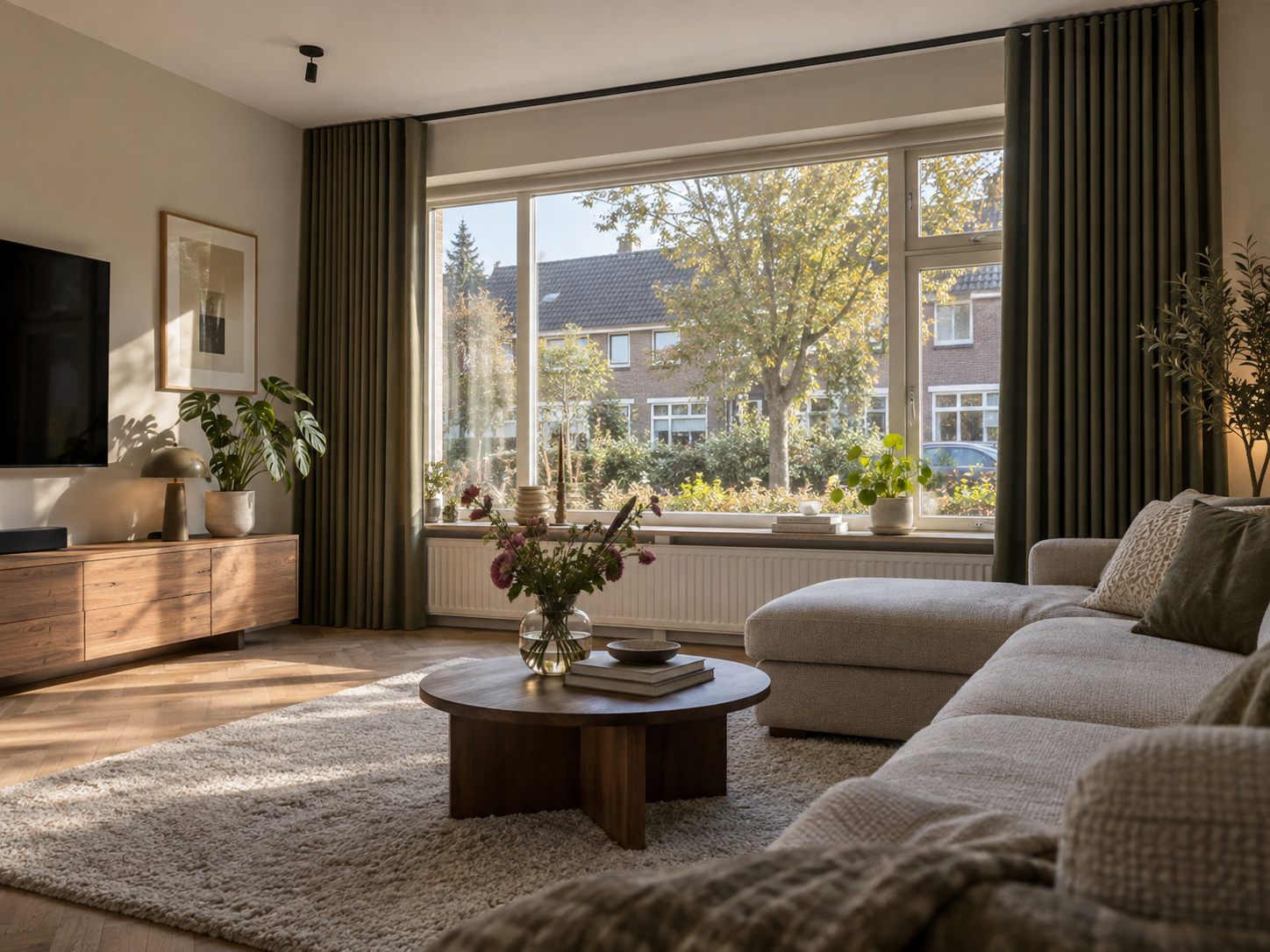
Dim out blocks a lot of bright light. That helps against glare on a television or monitor without making the living room very dark straight away.
Projector
Blackout for a projector
With a projector, residual light is more disturbing. That is why blackout is usually the better fit if you want to watch films during the day.
Morning sun or street lighting
Choose by how much light you want to keep
Dim out makes it considerably darker. Blackout lets no light through the fabric. Above all, choose what you find comfortable.
Cold and warmth
A dense curtain forms an extra layer in front of the window
Dim out and blackout are both dense fabrics. When the curtain is closed, you often notice fewer cold downdraughts and draughts by the window. In the sun, the fabric also keeps a lot of direct light out of the room.
It does not replace good glazing or external sun shading, but it can make the area by the window feel more comfortable.
Echo
Plenty of fabric often makes a room sound less harsh
With lots of glass, hard floors and few soft materials, a dense curtain fabric can help reduce echo.
Our dim out and blackout fabrics have not been acoustically tested. That is why we do not state a fixed dB value.
Large windows and sliding doors
Also think about where the open curtain will go
With a wide window, you can choose one curtain panel or two panels. Decide in advance whether the curtain should open to the left, to the right or to both sides.
The space taken up by the open curtain depends mainly on the number of gliders and the chosen 6 or 8 cm spacing.
See how to measure correctlyTwo layers
Light by day, darker later
Want plenty of light during the day and more privacy or less light later? Then combine voile or inbetween with dim out or blackout on a double track.
Decide for each layer what you need: voile for an open view or inbetween for less see-through during the day. On the room side, choose dim out if you like a little residual light, or blackout if you want to exclude light through the fabric.
Compare at home
Test a light dim out, a dark dim out and a blackout sample
Hold the samples up to the same window at home. You will quickly see how much difference the colour makes with dim out, and that no light comes through the fabric with blackout.
- Take one light dim out colour.
- Take one dark dim out colour.
- Take one blackout colour you like.
- Compare them during the day at the same window.
Frequently asked questions
Questions about room darkening wave curtains
Here are the main questions about the difference. For all fabric details, go to dim out or blackout.
What is the difference between dim out and blackout?
Dim out blocks approximately 75–85% of the light. Blackout lets no light through the fabric.
Is dim out dark enough for a bedroom?
For many normal sleepers, yes. If you want to sleep during the day or are very sensitive to light, blackout is usually a better fit.
Why can a room with blackout still be light?
Because light can also come in above, along the sides, below the curtain or between two curtain panels.
Can a light blackout colour really darken a room?
Yes. With our blackout fabric, light colours are lightproof too.
Why does a dark dim out colour block more light?
In the dark dim out colours, more black thread is woven in. As a result, more light is blocked.
What is better for watching TV?
Dim out is often enough to reduce bright light and glare. Blackout is useful if you want to make the room much darker.
What should I choose for a projector?
Blackout is usually the best choice, because residual light is more disturbing with a projector.
Do room darkening curtains also help against the cold?
A dense curtain forms an extra layer in front of the window. As a result, you often notice fewer cold downdraughts and draughts.
Can I combine voile or inbetween with dim out or blackout?
Yes. With two tracks you can use a light layer during the day and close the dense curtain later.
Can I compare free samples first?
Yes. Ideally, order a light and a dark dim out sample and one blackout sample. Hold them up to the same window at home.
Still unsure?
Start with three free samples
A light dim out, a dark dim out and a blackout sample show the difference much better than a photo on a screen.