Skip to content
Free fabric samplesMade in the NetherlandsFree deliveryShipped hanging
Gordijnen.com
☰
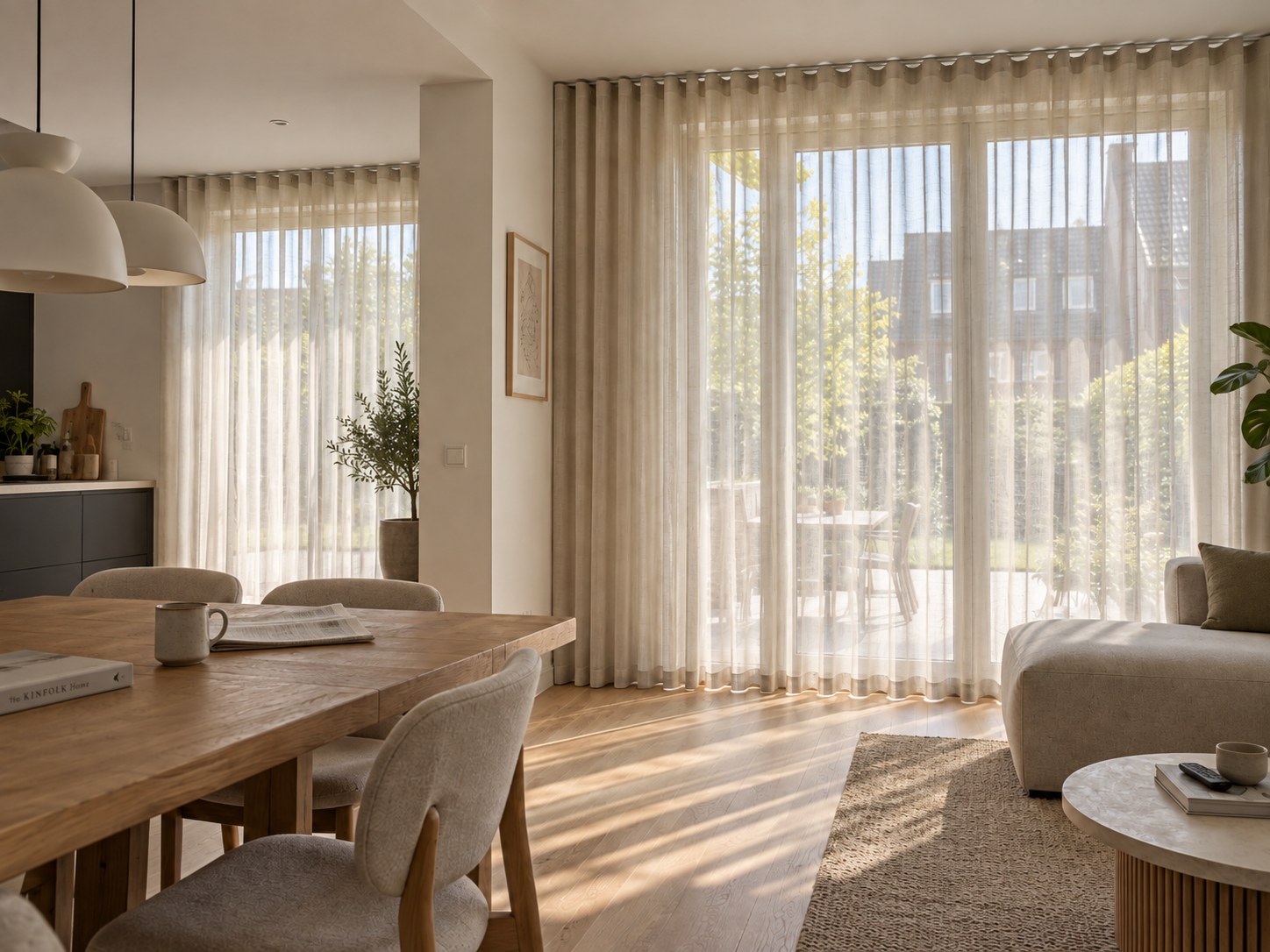
Light inbetween wave curtains letting daylight into a living room with a dining table

From open voile to dense opaque curtain

Compare light filtering wave curtains

Light filtering curtains let daylight into the room through the fabric. How much you can see through them depends on the weave. Compare voile, inbetween, semi-sheer, Textured weave and dense opaque curtain for daylight, see-through and privacy.

  • Daylight
  • See-through
  • Privacy by day and in the evening

The differences side by side

Five fabrics, from open to dense

Within our collection, the order runs from voile to dense opaque curtain. Thickness alone does not tell you how much you can see through a curtain. The space between the threads also makes a difference. Below you can compare the fabrics for light, view and privacy from outside.

  1. VoileOpen and airyView the fabric
  2. InbetweenLots of light, less see-throughView the fabric
  3. Semi-sheerDenser weaveView the fabric
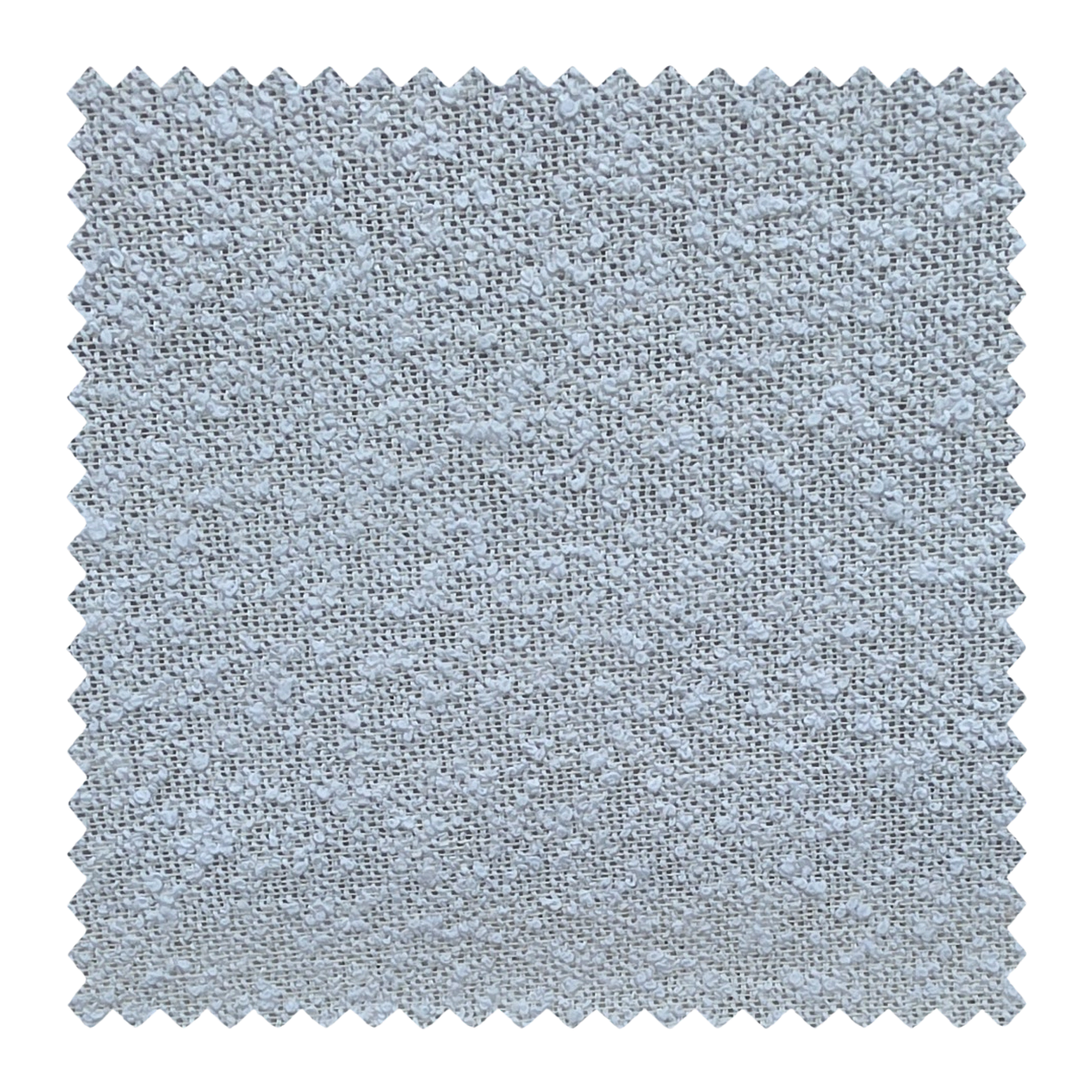
  4. Textured weaveFine, with a visible textureView the fabric
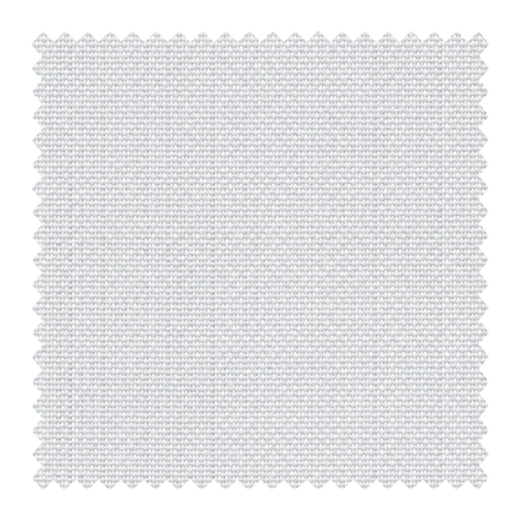
  5. Opaque curtainDense, with little see-throughView the fabric

This is a broad comparison. Colour, light and the situation at your window also play a part. On a small screen you can scroll the table sideways.

Daylight, see-through and evening privacy per fabric
FabricDaylight through the fabricLooking outsidePrivacy with lights on inside
VoilePlenty of daylight through the open fabric.You can still clearly see outside.Little screening; people and furniture may remain visible.
InbetweenPlenty of daylight, slightly more filtered.Less open than voile; the outside remains partly visible.With lights on inside, shapes and movement may be visible.
Semi-sheerLets daylight fall through a denser weave.Less see-through than our inbetween.More screening, but no guarantee that shapes are invisible.
Textured weaveLight comes through the visible weave.Between semi-sheer and a dense opaque curtain.The openings in the weave can show shapes against the light.
Opaque curtainCan still let light through; not a darkening fabric.No clear view outside through the dense fabric.The most screening of these five; also watch out for open edges.

What can you see through the curtain?

Letting daylight through is not the same as being see-through

Daylight is the light that comes into the room through the fabric. See-through is about what you can see through the fabric. Privacy from outside is about what someone outside can see of your room. So a dense curtain can let light through while you can hardly see through it.

During the day

It is often lighter outside

With plenty of daylight outside, the view in is often less noticeable. How close someone stands to the window and how much light there is in your room also matter. A light filtering curtain can soften the view in, but does not give the same privacy in every situation.

In the evening

The lights go on inside

Then the difference in light is reversed. Through an open weave, furniture, people or shadows can become visible. Want to sit undisturbed in the evening? Choose a denser curtain, or combine your light fabric with a second layer.

Once you have curtains hanging, if in doubt, also look from outside in with the lights on. That tells you more than just looking at the window from the sofa.

Which fabric appeals to you?

From an open window view to more screening

The photos show how the fabrics look in a room. They were taken at different windows and in different lighting conditions. Use them as mood images; the samples help you compare the weave side by side.

01 · 10 colours

Voile: the most view outside

Want to keep seeing the garden while the curtain is closed? Then start with voile. This is the most open fabric of these five. You still see a lot of what is happening outside the window, with the fine weave in front of it.

Voile suits a window where daylight and view come first. On a busy street, this fabric on its own offers little privacy. For the evening, you can hang a denser curtain next to it.

Composition
100% polyester
Maximum curtain drop
305 cm
Bottom finish
Weighted hem tape
Daylight through light wave voile by a dining table, with a view of the houses outside

02 · 10 colours

Inbetween: light in the home, a little less see-through

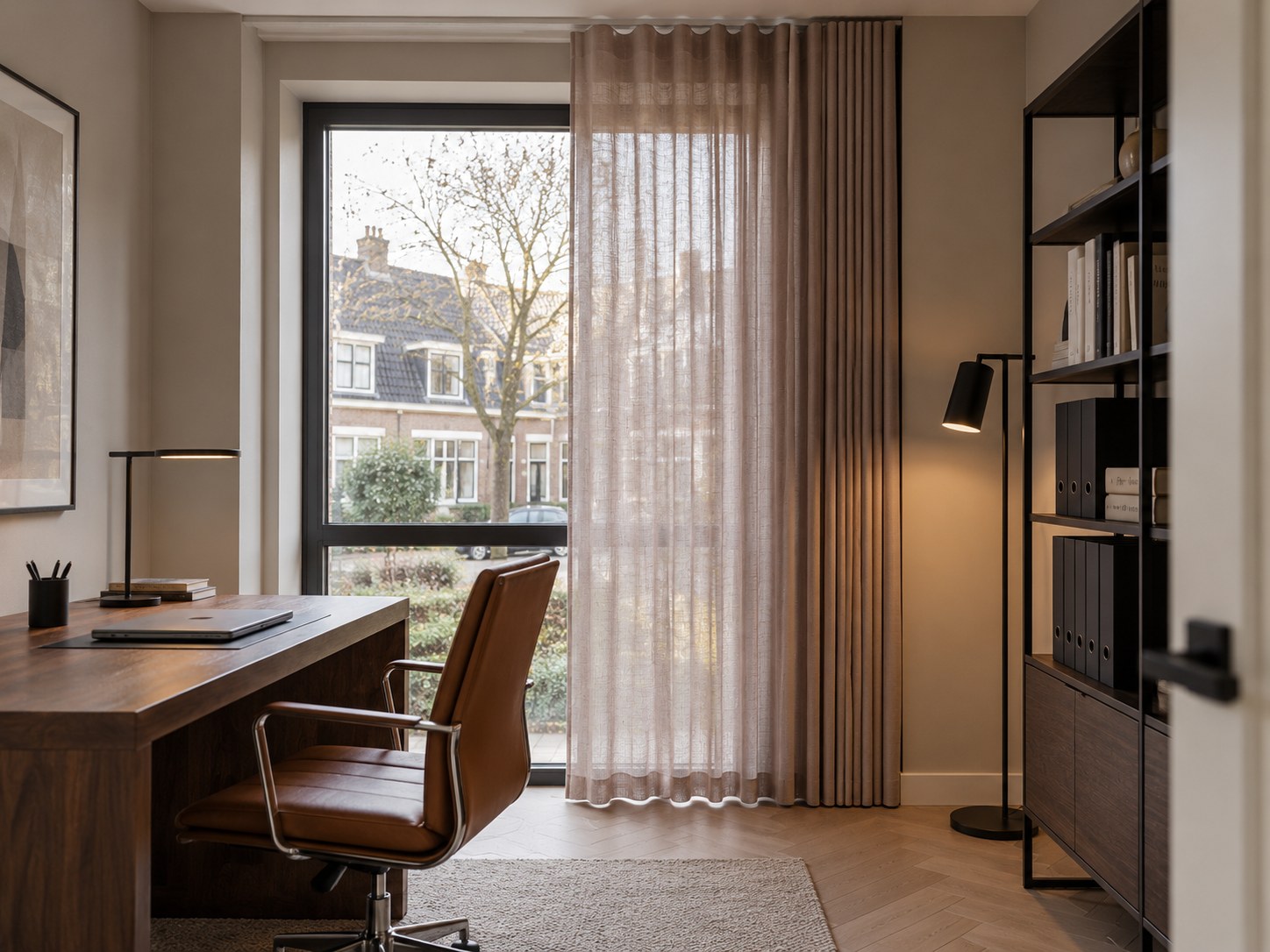
Do you find voile too open, but want to keep the room light? Our inbetween sits just above it. The fabric softens the view through the window. You stay in touch with the outside without everything being equally sharp.

The fabric contains 5% linen, alongside recycled polyester. This gives the weave its own character. Inbetween can reduce the view in during the day, but is no guarantee of privacy once it gets dark outside.

Composition
95% recycled polyester · 5% linen
Maximum curtain drop
285 cm
Bottom finish
Weighted hem tape
Light inbetween wave curtains in front of a window with daylight through the fabric

03 · 10 colours

Semi-sheer: one step denser

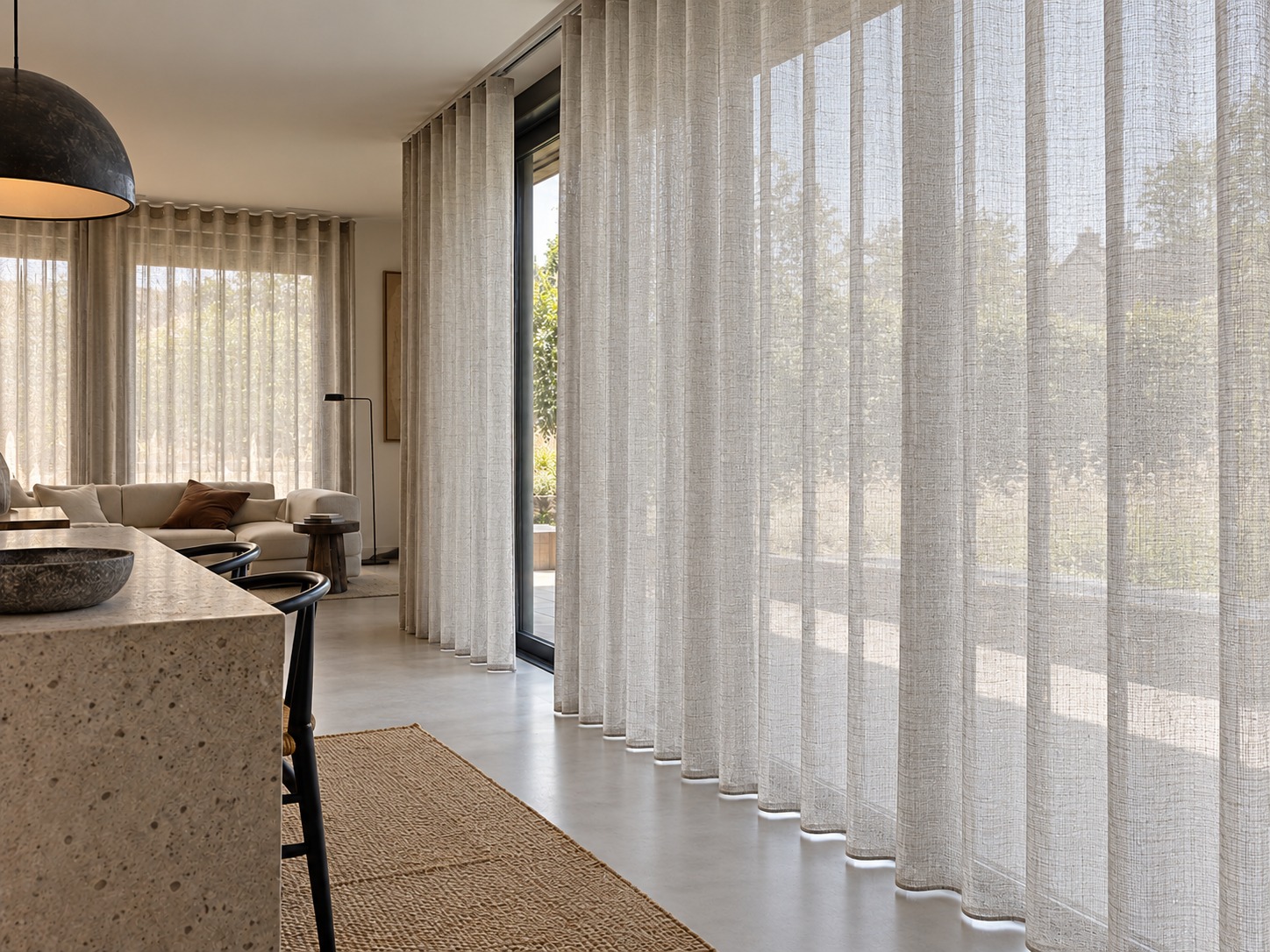
With our semi-sheer fabric, the weave is more noticeable and you see outside less easily than with inbetween. Daylight still comes through. This is a logical fabric to compare with if you are looking for a little more screening.

The name can be confusing: other shops sometimes also call an inbetween semi-sheer. With us, they are two different collections. Place the samples side by side and you will see the difference we mean.

Composition
100% recycled polyester
Maximum curtain drop
295 cm
Bottom finish
Weighted hem tape
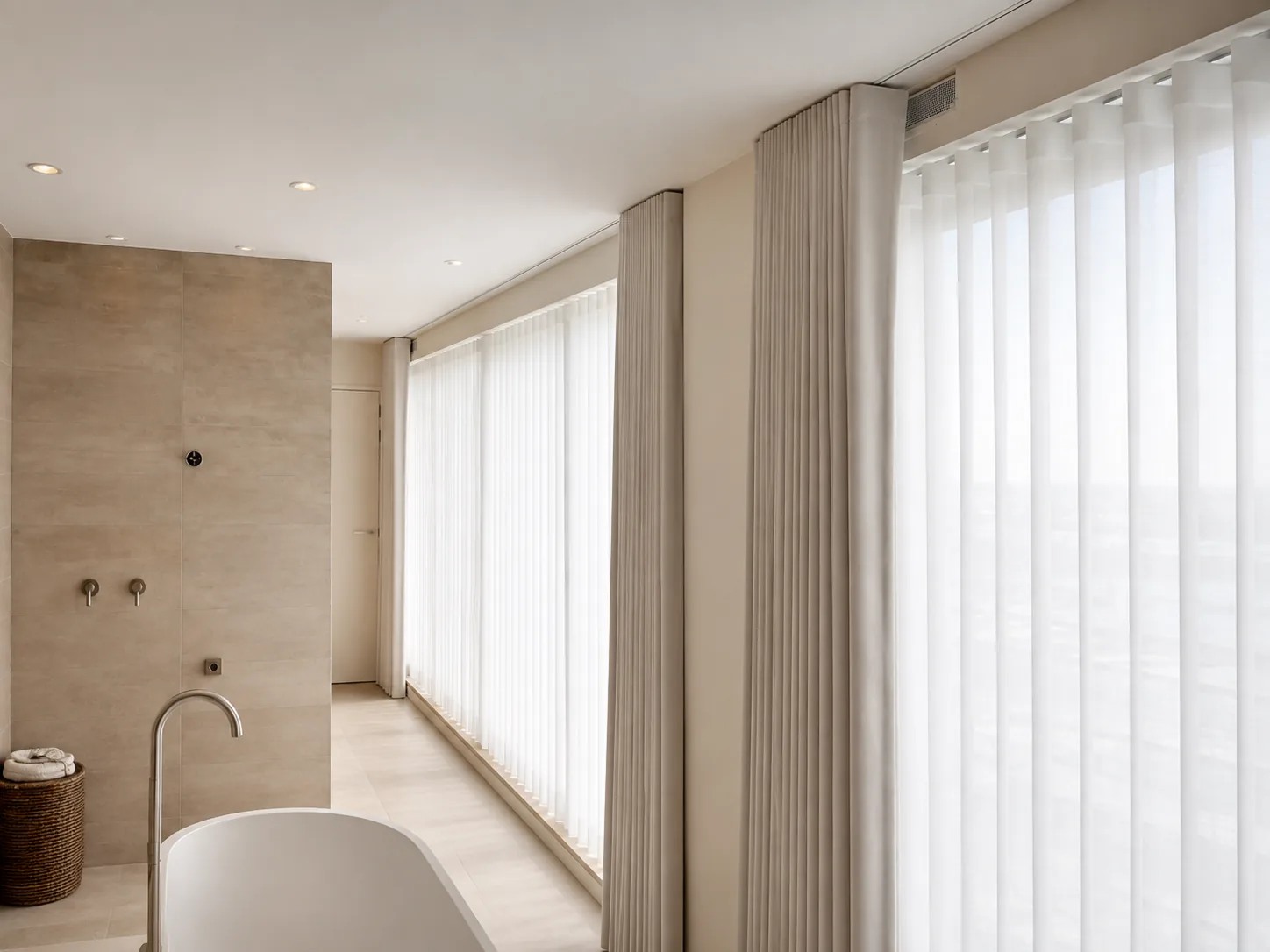
Semi-sheer wave curtains along the tall windows of a bright living room

04 · 6 colours

Textured weave: visible threads and still daylight

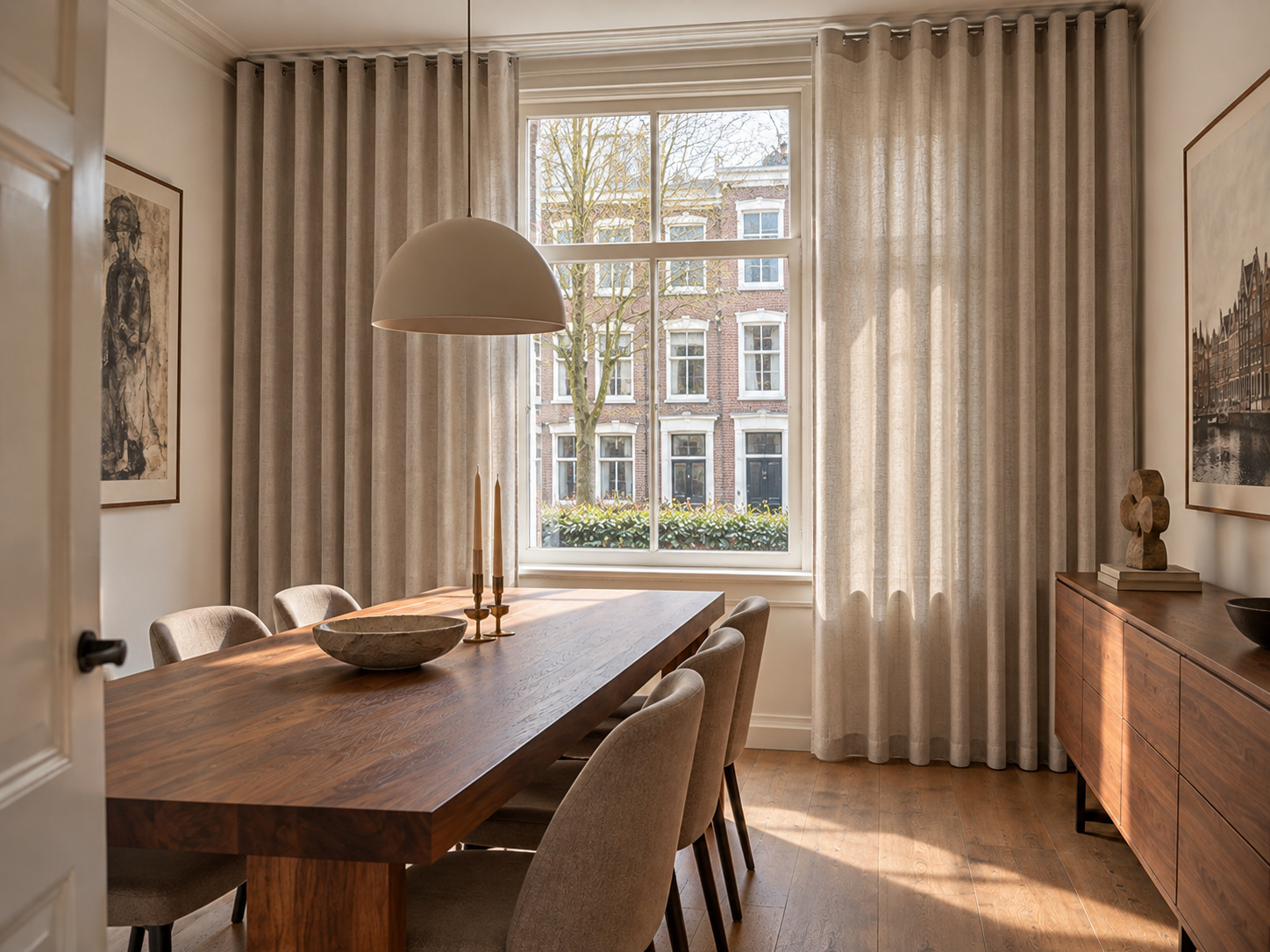
Textured weave is the name of our fine woven collection. You can see the threads and the small openings between them. If you are looking for more texture in the curtain, view this fabric together with semi-sheer and opaque curtain.

There are six colours: cream white, ivory, ecru, beige, light grey and grey. The fabric still lets light through and is not a darkening curtain. At the bottom we make a stitched 10 cm hem.

Composition
100% polyester
Maximum curtain drop
275 cm
Bottom finish
Bottom hem of 10 cm
Woven wave curtains in a dining room, with daylight through the fabric at the sides of the window

05 · 10 colours

Dense opaque curtain: above all, plenty of privacy

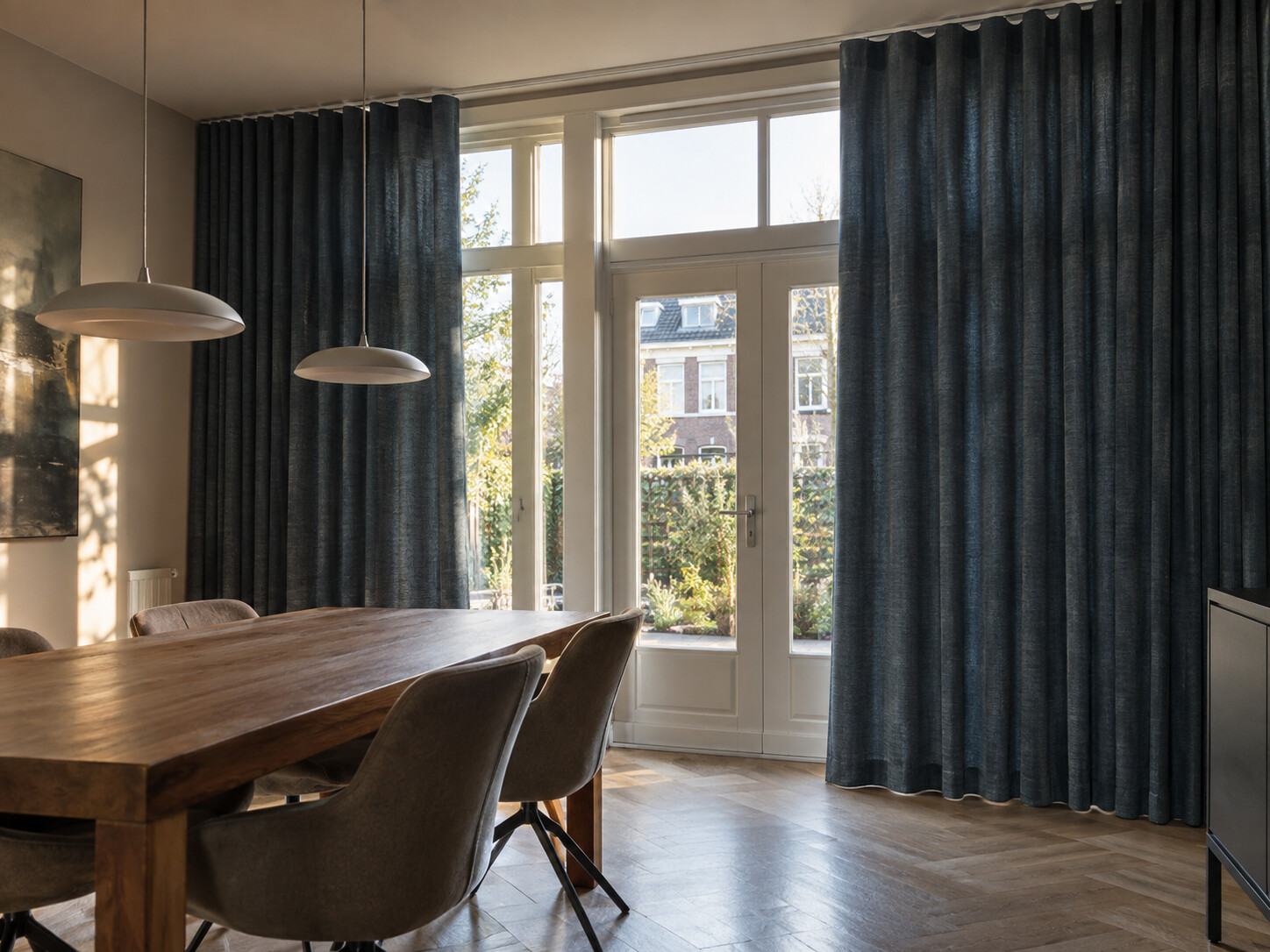
Our dense opaque curtain gives the most privacy of these five fabrics. Choose it when being able to see outside is less important, or as a second curtain for the evening.

Dense does not automatically mean dark. Light can still come through this fabric. If you want to darken the bedroom, compare dim out and blackout. Those are different fabrics, with a different purpose.

Composition
100% recycled polyester
Maximum curtain drop
275 cm
Bottom finish
Bottom hem of 10 cm
Dense blue opaque wave curtains on either side of garden doors in a dining room

The drops above are the maximum sizes of the finished curtain. Within that drop, we make the fabrics without vertical seams. Read how that works on floor to ceiling wave curtains.

Start with what you need

A window facing the street or the garden?

The same curtain can be just right at one window and too open at another. So first look at the view, the distance to passers-by and when you want to have the curtains closed.

I want to keep seeing the garden

Compare voile and inbetween. Voile leaves the most view outside. Inbetween makes the window view a little less open, with still plenty of daylight.

Start with voile

People walk past my window

Place inbetween, semi-sheer and Textured weave side by side. See how much you can still see through the weave. Bear in mind that the view in changes when the lights go on inside.

Compare the samples

I want more privacy in the evening

Look at the dense opaque curtain. Would you also like an open fabric in front of the window during the day? With two curtains on separate tracks, you can choose which layer to close at any moment.

View two layers
Two layers of wave curtains on separate recessed tracks: a light closed fabric by the window and a denser curtain in front of it

Light by day, denser in the evening

Two curtains at the same window

A voile or inbetween by the window, with a dense opaque curtain in front: that way you keep the daylight during the day and close the second layer in the evening. Both curtains need their own track and enough space for the waves to fall freely.

Does the room also really need to get darker, for example for sleeping? Then choose the second fabric for its darkening. See the difference between opaque curtain, dim out and blackout. Light around the edges remains a point to consider when measuring.

View tracks for wave curtains

Feel and see the difference

Five light shades to compare at home

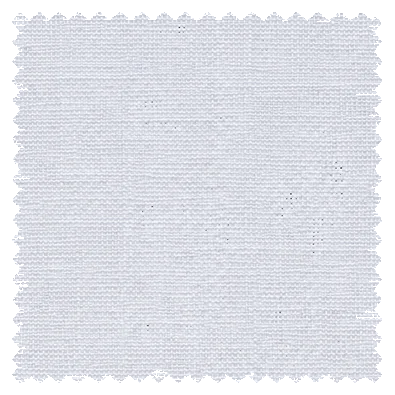
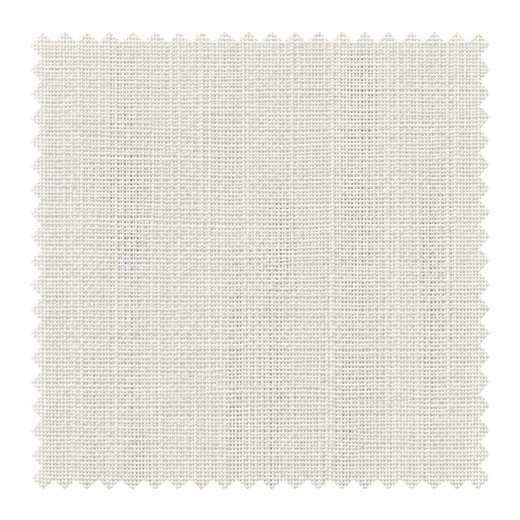
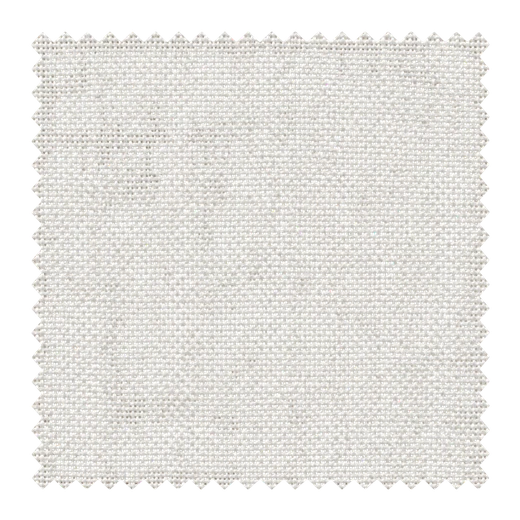
With roughly the same shade, it is easier to see the difference in weave. Below are white and cream white, with the colour number. Choose the fabrics you are unsure about. You will find other colours among all free curtain samples; you can request up to 12 samples.

Hold the samples side by side at the same window. Look at the openings in the weave and also place them by your wall or floor. A small sample does not show exactly how much privacy a whole curtain gives in the evening. Unsure about your window? Ask us for advice.

Frequently asked questions

Still unsure about light and privacy?

Which light filtering curtains stop people seeing in?
You cannot tell from the fabric name alone. The weave, colour and the light inside and outside all play a part. Of these five, a dense opaque curtain gives the most privacy, while it can still let light through. With voile, inbetween, semi-sheer and Textured weave, shapes may remain visible, especially in the evening.
Is a thicker fabric always less sheer?
No. Thick threads can lie quite far apart, so you can still see through the fabric. A finer thread, on the other hand, can be densely woven. So look at the openings between the threads and compare the fabric at a window.
Does the colour make a difference to the light?
Yes, colour also plays a part. A dark fabric can block more light than a light version of the same fabric. To compare the difference in weave, first compare roughly the same shade. Then look at the colour you actually want to order at your own window.
Is semi-sheer the same as inbetween?
These names are not used in the same way everywhere. In our collection, Semi-sheer is more densely woven than Inbetween. So they are two separate fabrics. Our inbetween contains 5% linen; the semi-sheer fabric is 100% recycled polyester.
Does a 6 or 8 cm wave change the transparency?
The fabric itself stays the same. The wave spacing determines the shape and size of the waves. Where the fabric overlaps in a fold, the curtain may look darker in places. First choose the weave and colour, then the wave that suits your track and window.
Can I request all five fabrics as free samples?
Yes. Choose a light shade per fabric below, or go to all free curtain samples for other colours. You can choose up to 12 samples. A sample helps you compare colour and weave; it does not show exactly how much privacy a fully closed curtain gives in the evening.

From fabric choice to your curtain

Do you know which fabric it will be?

Then read the measuring instructions and design your curtain. You choose the colour, 6 or 8 cm wave and the configuration. The price appears as soon as you enter the width.

The fabric determines the openness; the wave determines the folds. See how a wave curtain works and the difference between 6 and 8 cm wave.

From fabric sample to made to measure

Ready to choose your wave curtain?

Completely free

Your free samples

0 of up to 12 samples chosen.

You haven’t chosen any samples yet. Browse our fabrics and add the colours you want to compare at home.

    12 more samples to choose.

    Choose more samples

    No account or payment needed. Normally posted the same day or within 24 hours.