
6 cm waveCompact in depth
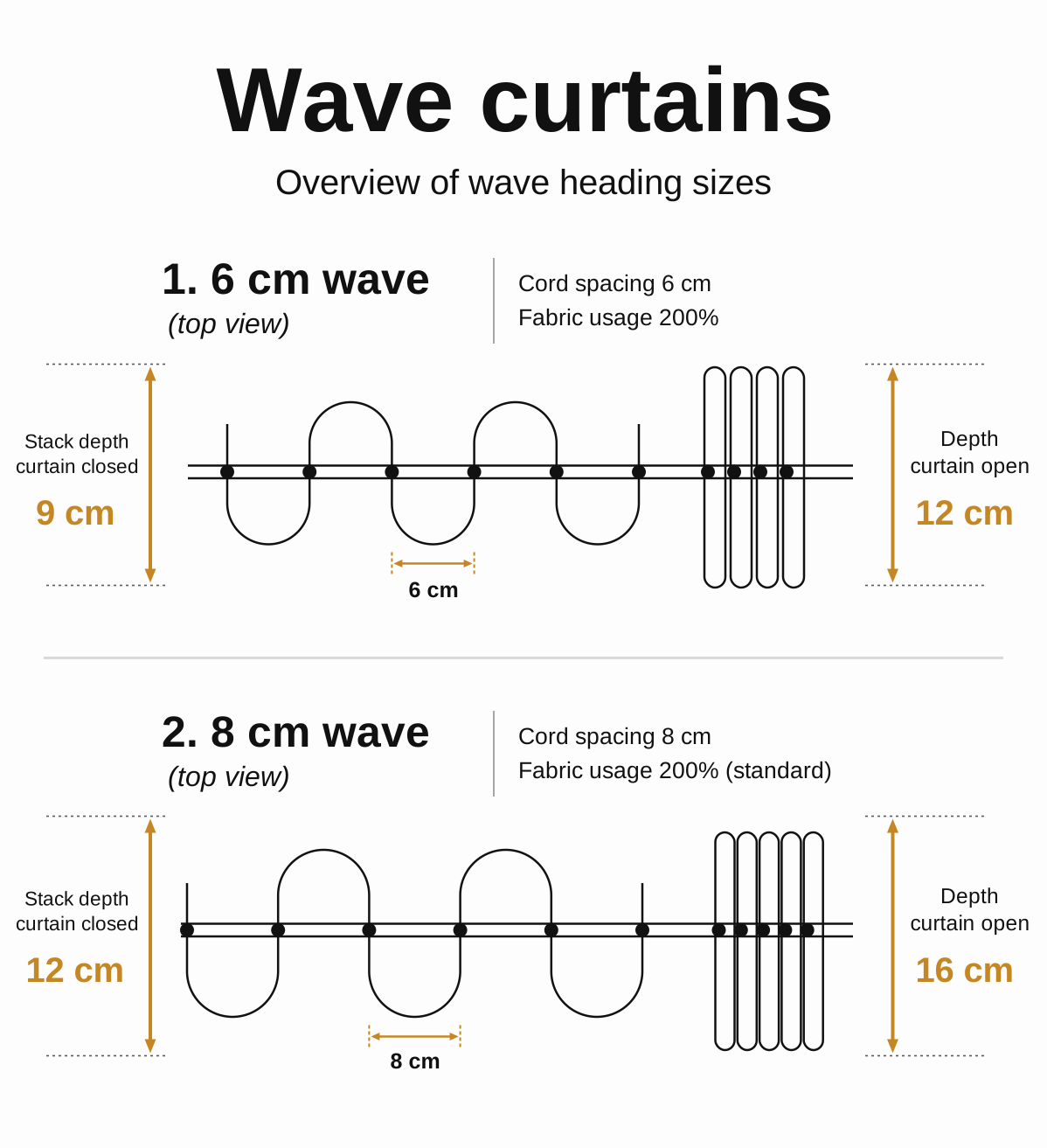
- 6 cmcentre to centre between the gliders
- 12 cmbetween the hooks in the wave tape
- approx. 9 cmdepth when the curtain is closed
- approx. 12 cmdepth needed when the curtain is open
- more glidersso a wider stack at the side
Help me choose · 6 cm or 8 cm
A 6 cm wave heading gives more, smaller waves and needs less depth. A 8 cm wave heading gives fuller waves and uses fewer gliders. As a result, the opened stack at the side is always narrower than with a 6 cm wave.
At Gordijnen.com we make both options with 200% fabric. So the choice is not about more or less fabric, but about the distance between the gliders, the depth of the waves and the space you have.
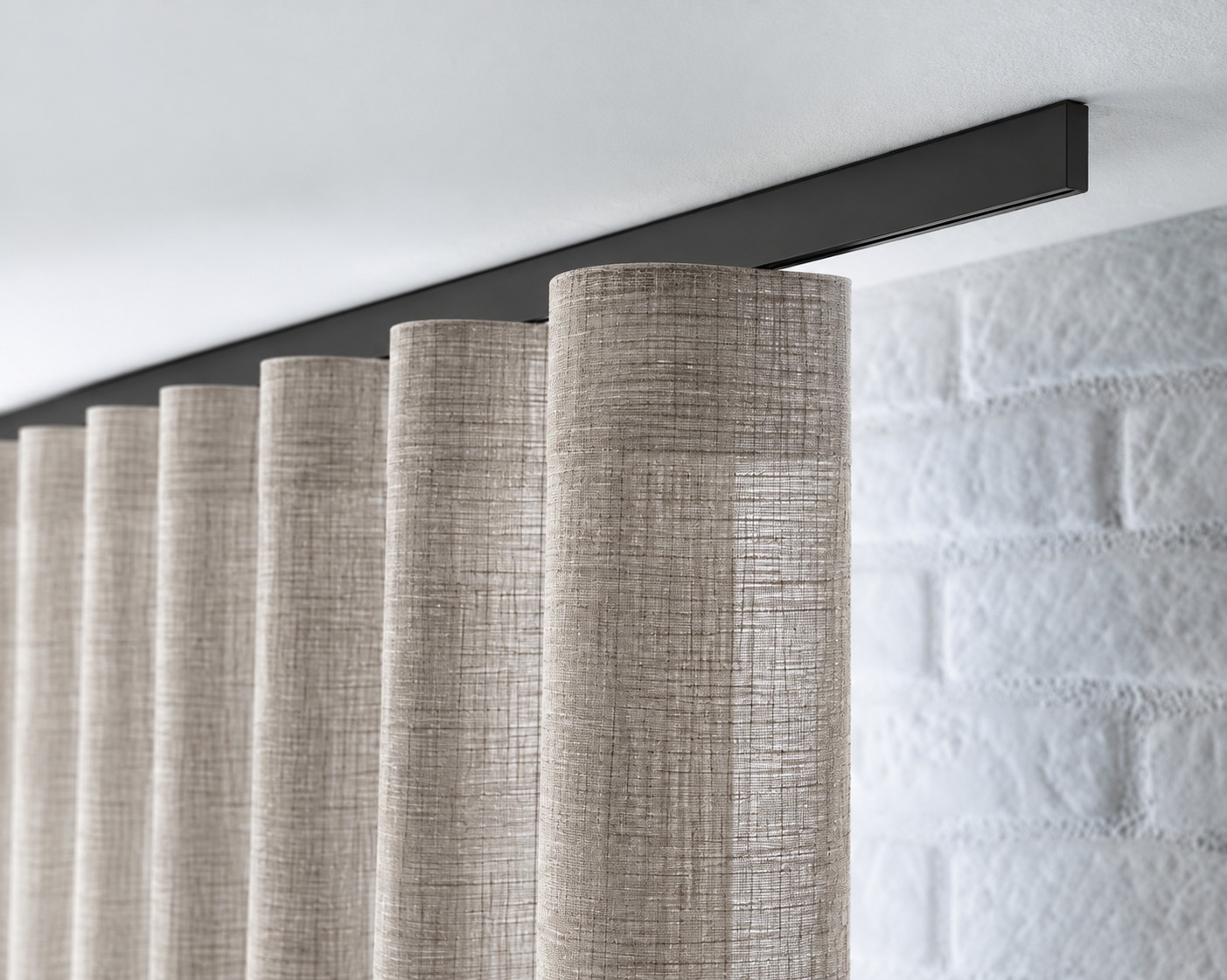
Short answer
In short: a 6 cm wave has more, smaller waves and takes up less depth. Because more gliders are needed, the opened stack at the side is always wider than with a 8 cm wave. A 8 cm wave has fuller waves, needs more depth and gives a narrower stack. Which option suits you better therefore depends on where you have the available space.
Personal comparison
This tool uses the same production steps as our measuring page. So you don’t just see a general explanation, but what 6 or 8 cm actually changes for your track.
Worked example without the calculator
Below, compare the same 300 cm track with one curtain panel. You can see how much space the opened curtain needs beside the window.
With this track the difference is clear: 6 cm uses 12 more gliders and gives a stack that is 13.2 cm wider. 8 cm, on the other hand, needs 4 cm more depth.
How we calculate the stack back: number of gliders × 1.1 cm + 2 cm per curtain panel for the end stop and end spreader. The exact order drop and full measuring steps are on the measuring page.
What does 6 or 8 cm stand for?
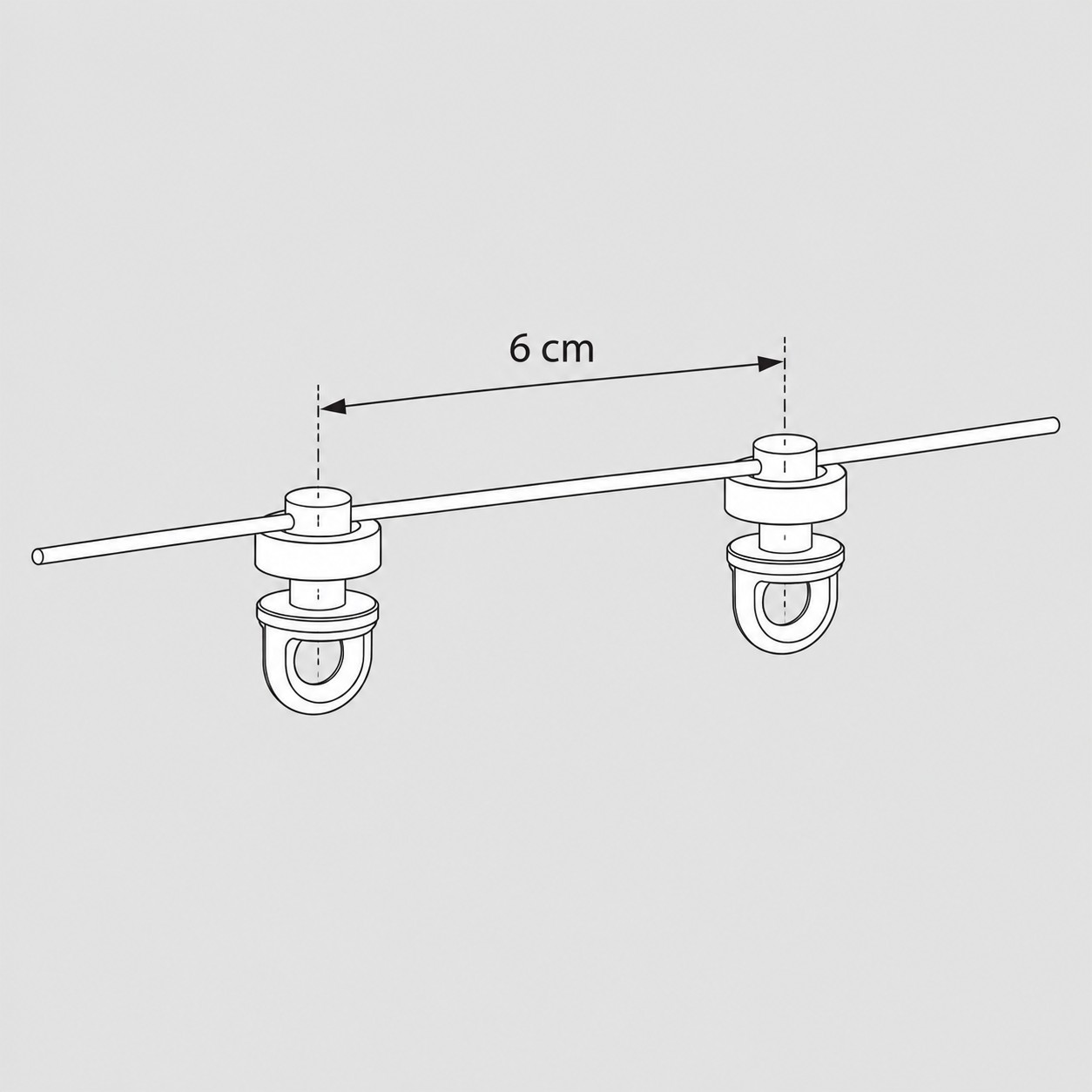
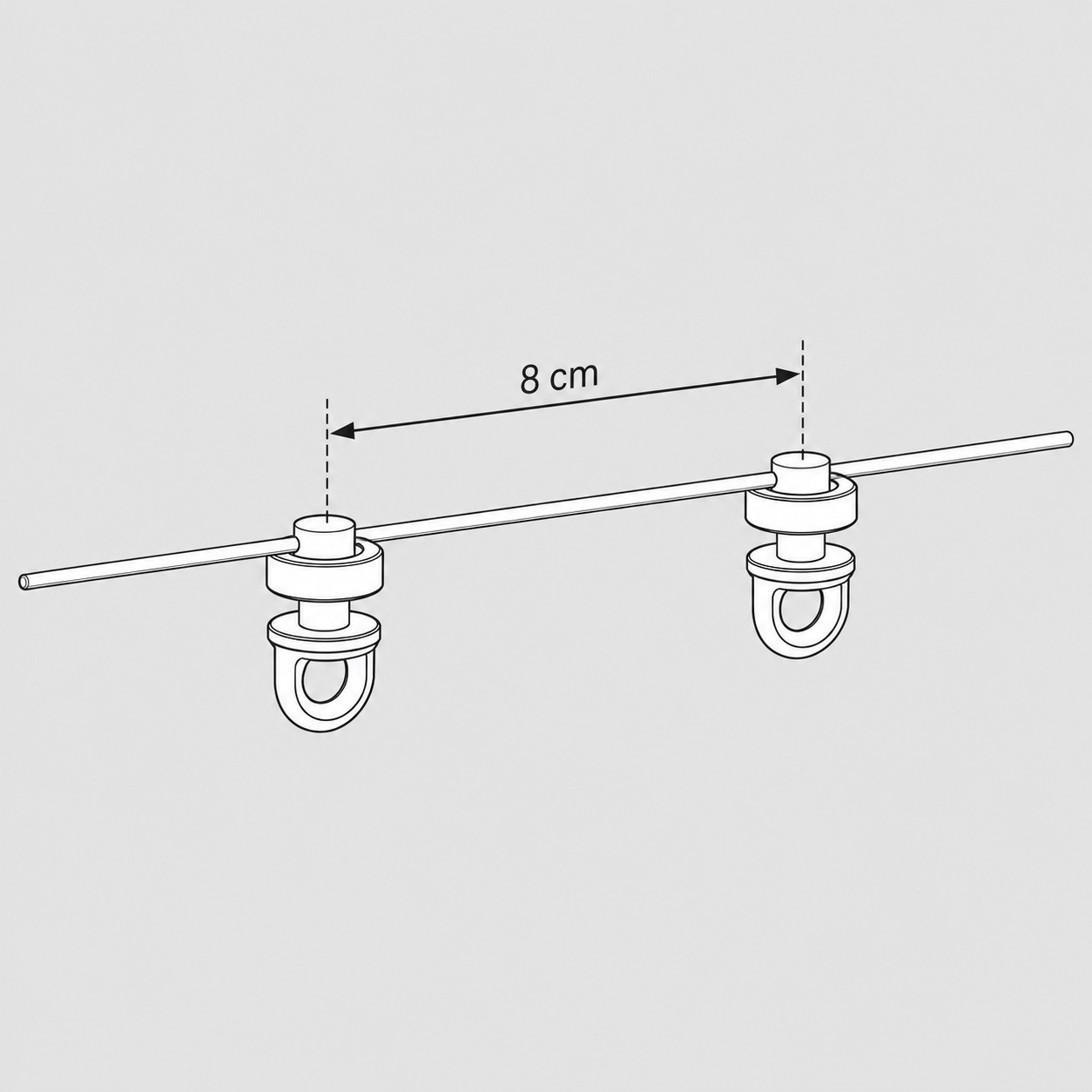
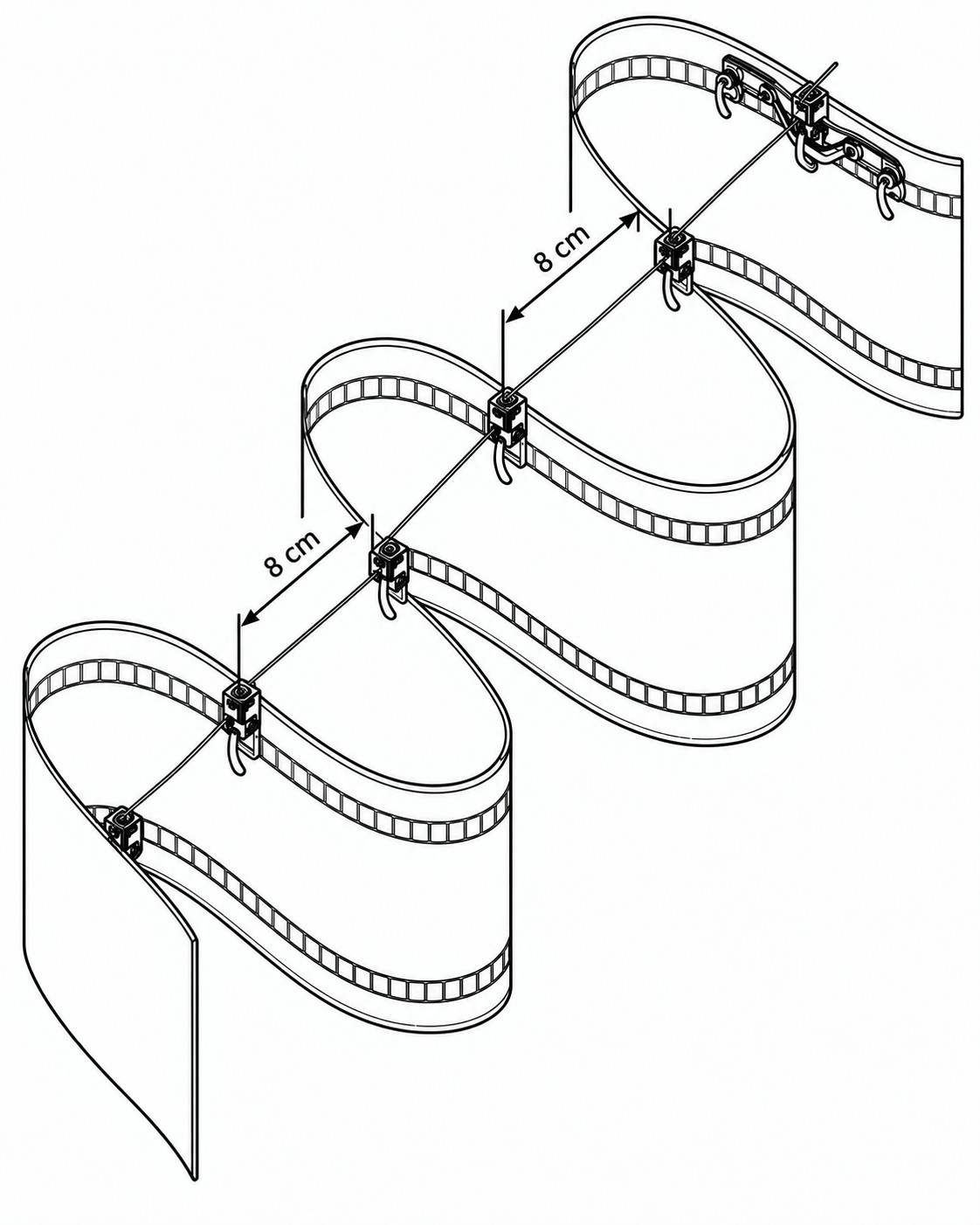
6 or 8 cm is not the visible depth of one wave. It is the maximum centre-to-centre distance between the gliders when the cord is taut in the track. These gliders are also called runners. The distance determines how many gliders are needed and how the fabric is distributed in waves.
From glider spacing to wave
The cord limits the distance between the gliders to 6 or 8 cm when it is taut. When closing, you spread the waves over the track. When opening, the gliders slide towards each other.
200% fabric for both options
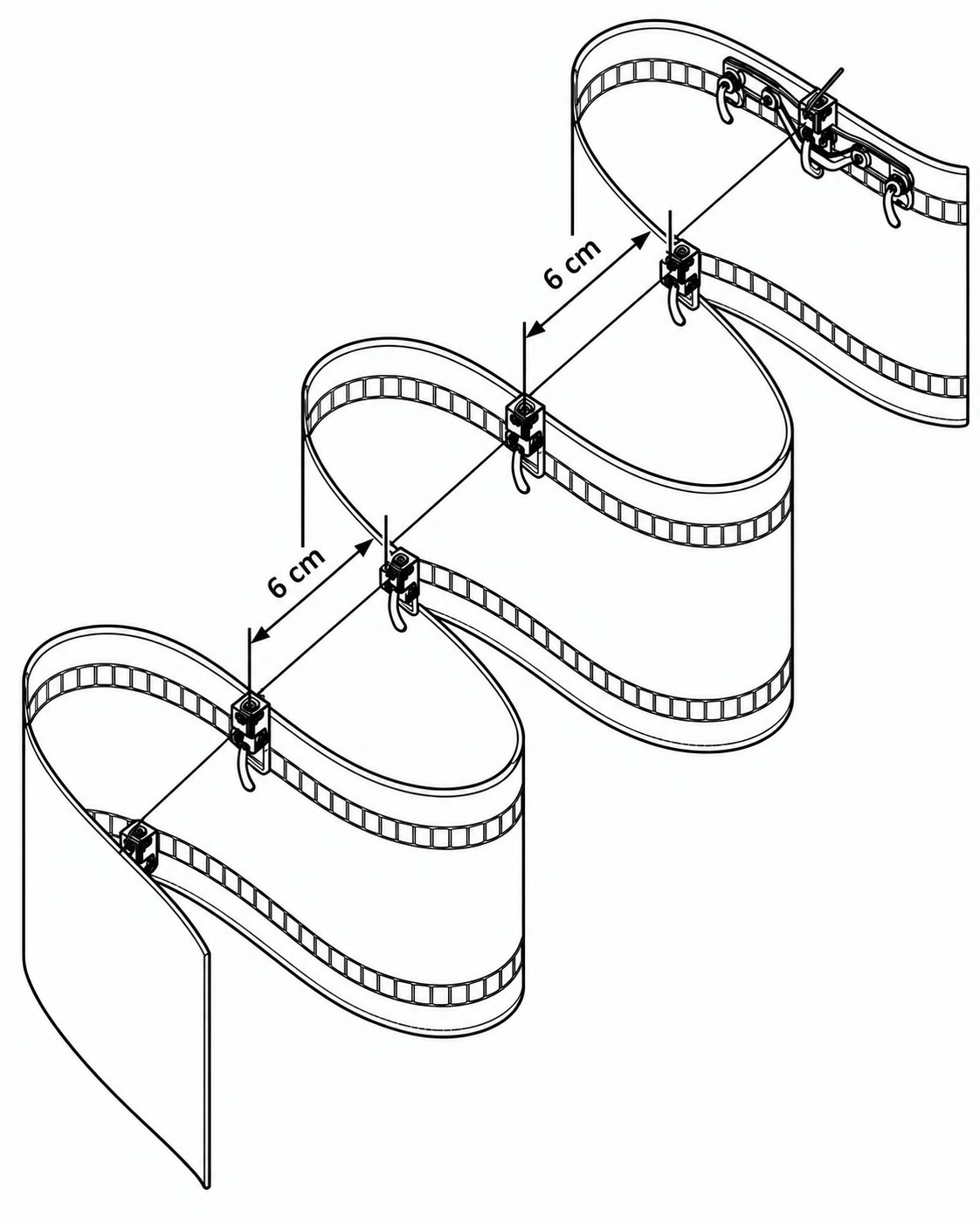
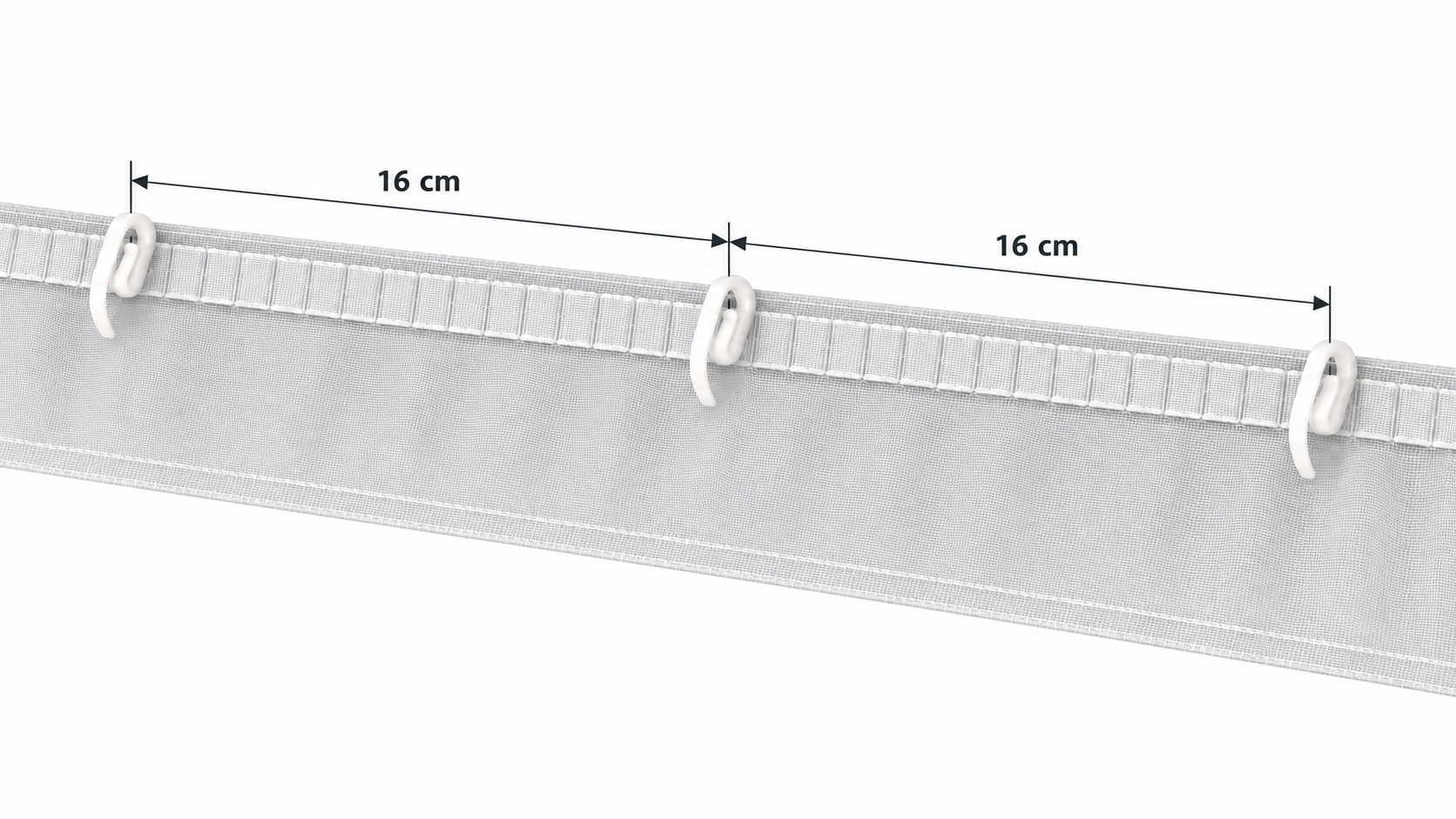
At Gordijnen.com we make both 6 and 8 cm wave with 200% fabric. This means the distance between the hooks in the wave tape is twice the glider spacing.
This is an important difference from suppliers who use a different fabric allowance or a different wave system. Our measurements on this page belong to the production construction of Gordijnen.com.
See how the complete wave system works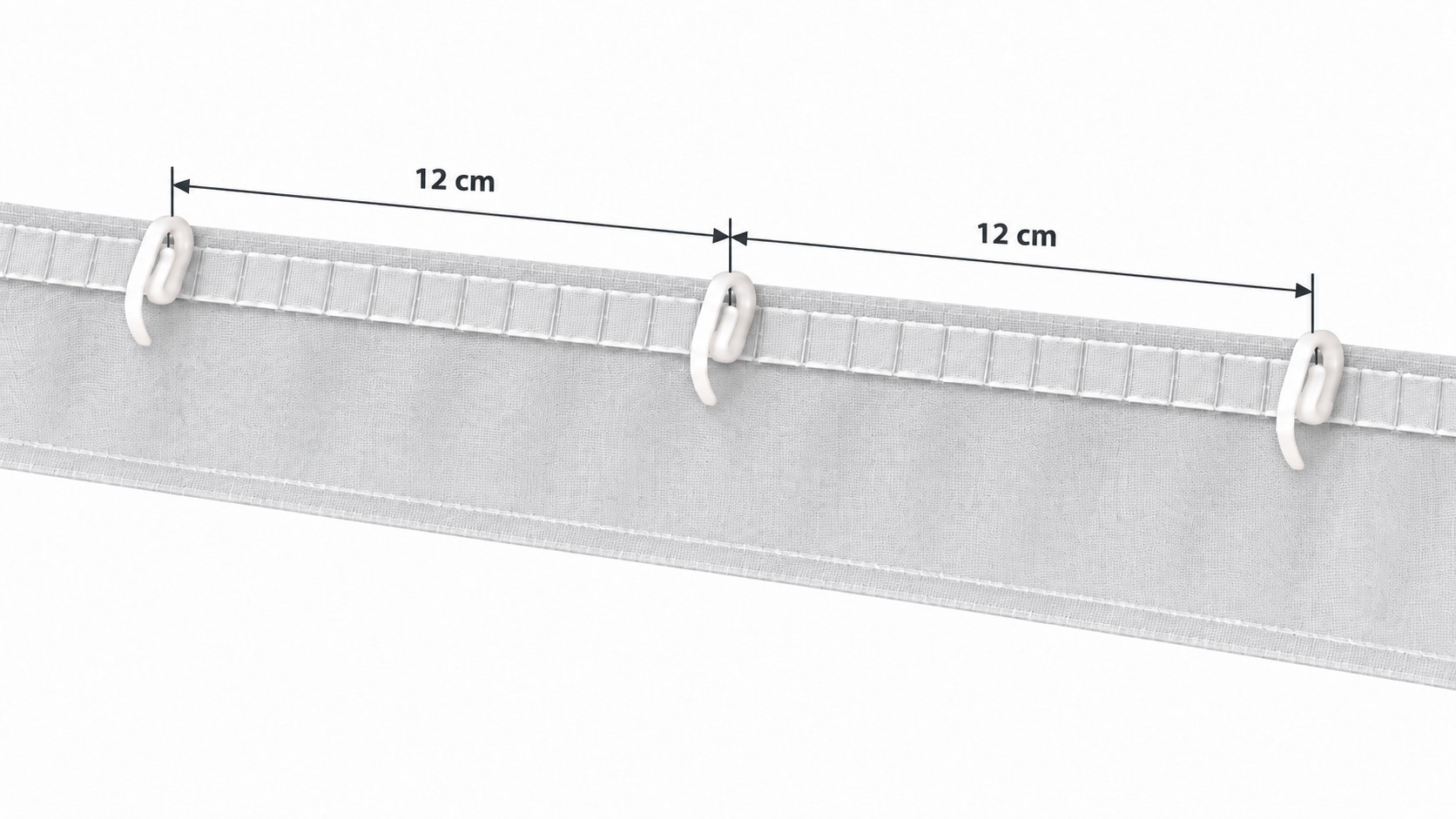
How much depth do you need?
A wave curtain runs alternately in front of and behind the track. That is why the available depth matters, especially with a pelmet box, deep window sill, window handle, heating pipe or ceiling spotlight.
If you have little depth, 6 cm is the more compact choice. If, on the other hand, you have little space beside the window to stack the open curtain, 8 cm is better because the stack at the side is narrower.
What does it look like in a room?
The fabric, colour and window size have a big influence on the overall look. So don’t just look at the measurement in centimetres, but also at the type of room and the look you are after.
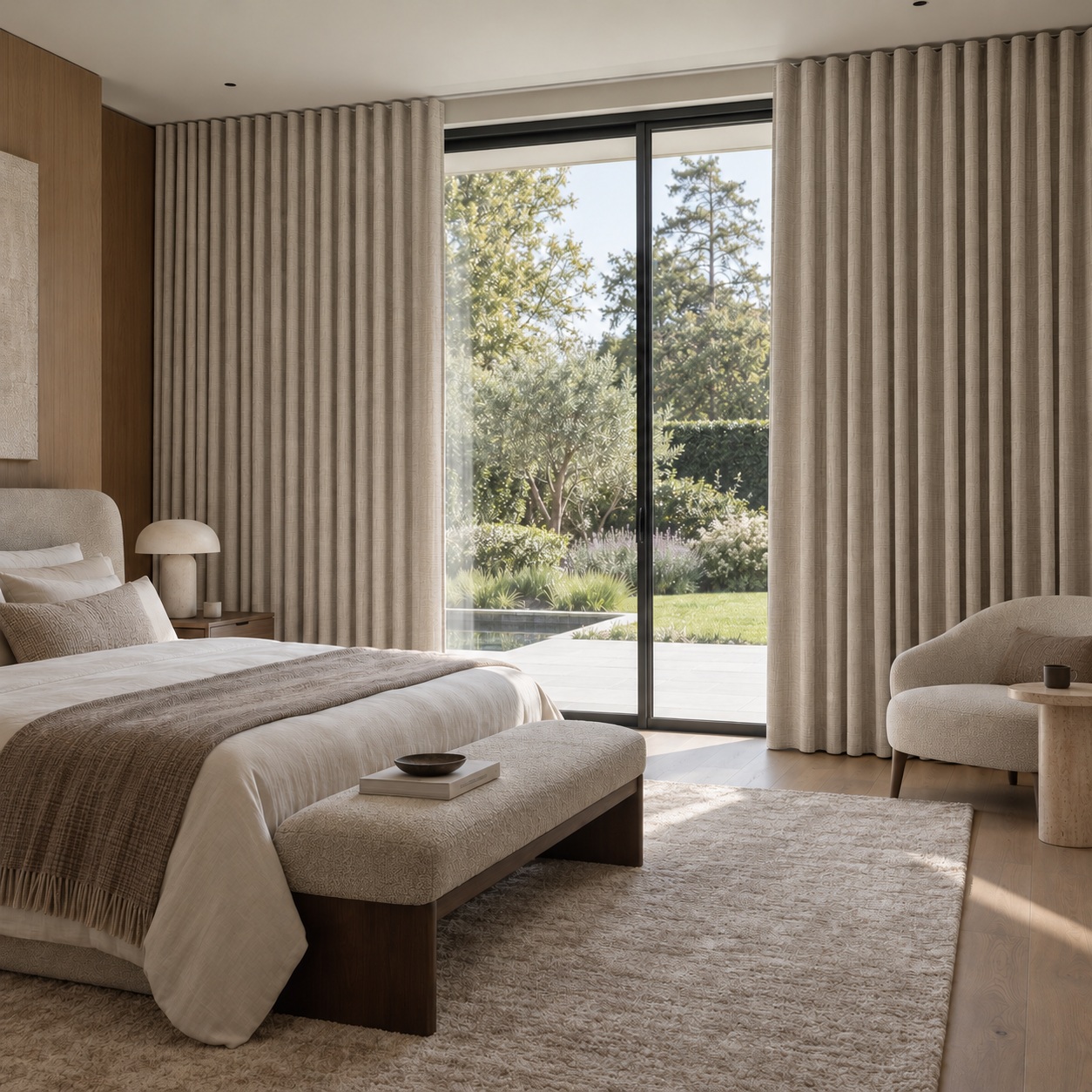
Beautiful when you want a finer distribution or when the available depth is limited. With the same track width, more gliders are needed.
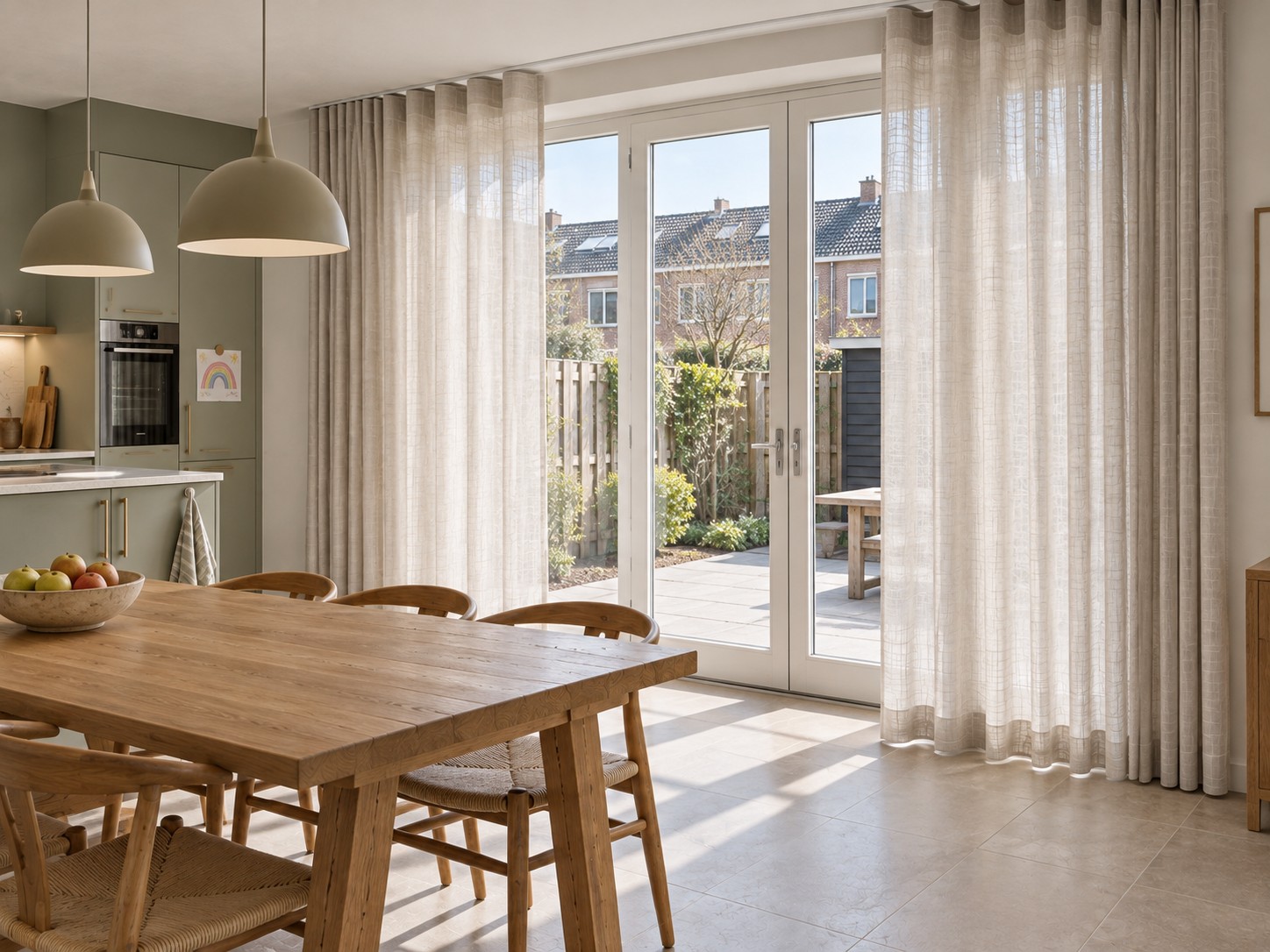
Gives a spacious look with wide windows and sliding patio doors. The wave needs more depth, but the opened stack at the side is narrower than with a 6 cm wave.
Two wave curtains one behind the other
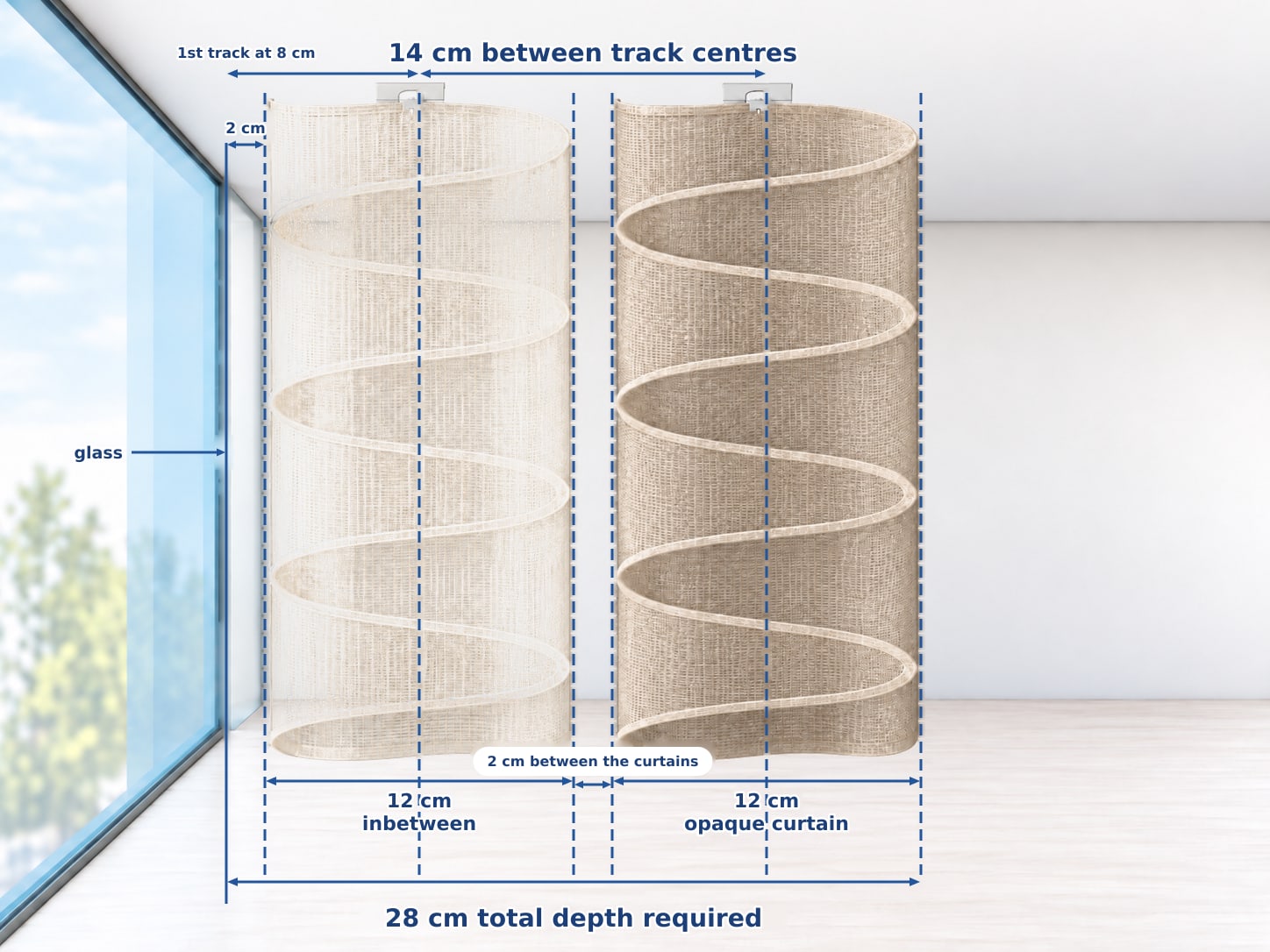
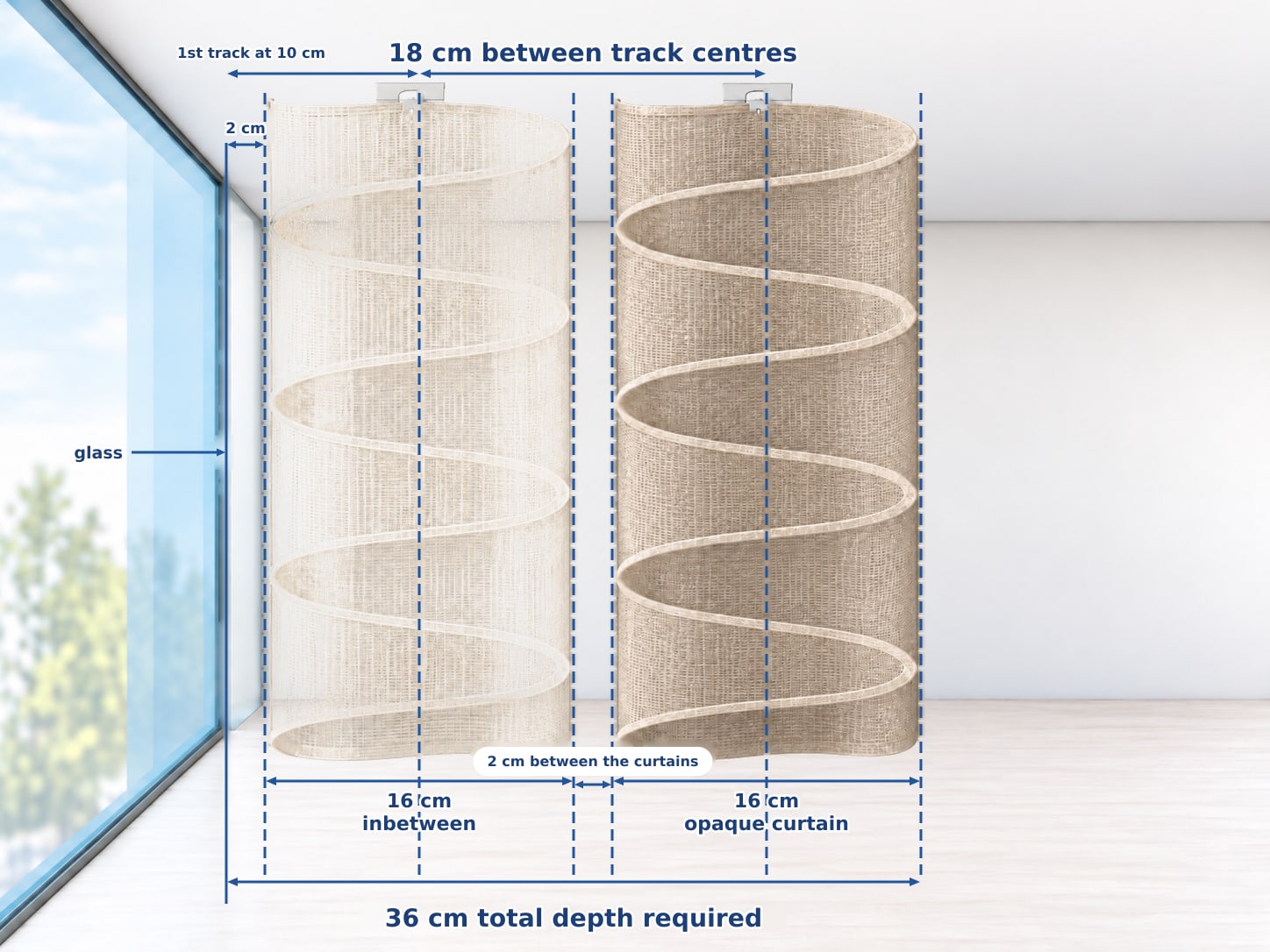
With two tracks you need space for both curtains and clearance between them. This applies, for example, to an inbetween behind an opaque curtain. With 6 cm wave, the total depth needed comes to approximately 28 cm. With twice 8 cm wave, it is approximately 36 cm.
Which suits you better?
No option is always better. The right choice depends on the space in front of and behind the track, where the curtain will stack when open and the look you like.
6 cm needs less depth and is therefore often easier in a narrow pelmet box.
8 cm uses fewer gliders and therefore gives a narrower stack when the curtain is open.
8 cm gives full waves and is the logical choice if you want to keep the stack beside the doorway as small as possible.
6 cm clearly saves depth. With two layers, it makes a difference of approximately 8 cm in our construction.
Measure the point that sticks out furthest. The wave must be able to move freely everywhere.
Look at the two mood photos and then choose on technical grounds. Both options are made with 200% fabric.
Everything side by side
| Component | 6 cm wave | 8 cm wave |
|---|---|---|
| Glider spacing | 6 cm centre to centre | 8 cm centre to centre |
| Hook spacing in wave tape | 12 cm | 16 cm |
| Fabric usage at Gordijnen.com | 200% | 200% |
| Wave appearance | more, smaller waves | fewer, fuller waves |
| Depth closed | approx. 9 cm | approx. 12 cm |
| Depth open | approx. 12 cm | approx. 16 cm |
| Number of gliders | more | fewer |
| Stack back at the side | wider than 8 cm | narrower than 6 cm |
| Double track centre to centre | approx. 14 cm | approx. 18 cm |
| Double arrangement total depth | approx. 28 cm | approx. 36 cm |
| Practical for | little depth, pelmet box, double layers | wide windows, little stacking space at the side |
The exact stack back depends on the track width and the number of curtain panels. That is why we calculate it for you personally at the top of the page.
Frequently asked questions
Here are the questions that most often cause confusion with this choice.
Made your choice?
On the measuring page you enter the track width. There you get the exact production size, the number of gliders and the stack back for your chosen 6 or 8 cm wave.
From fabric sample to made to measure